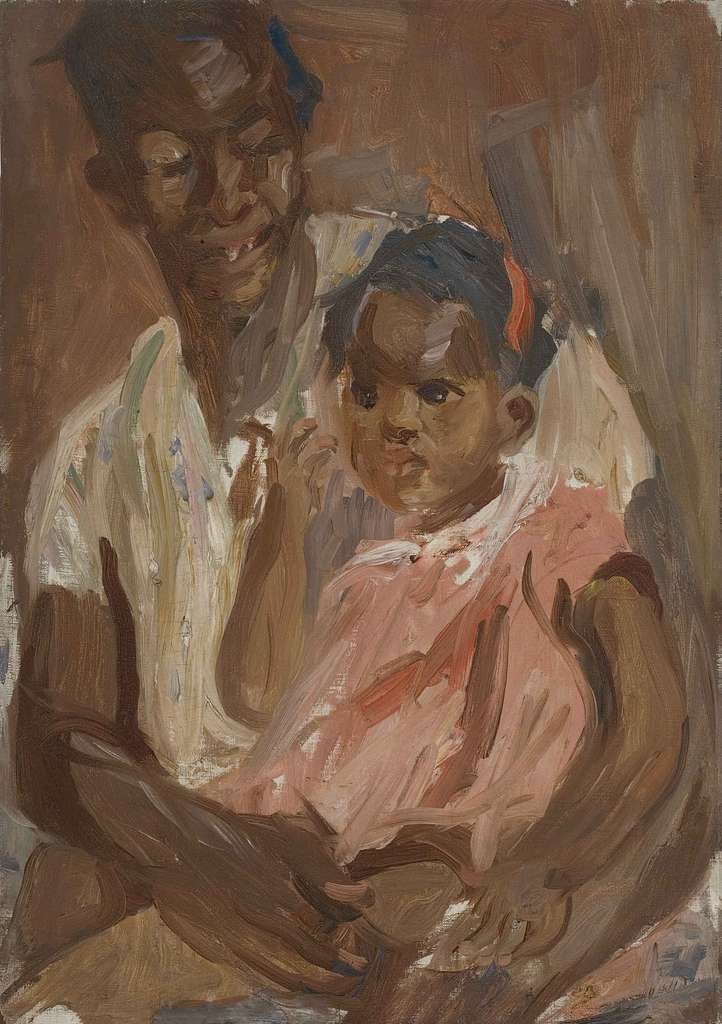
Mother and Child, Havana, 1926
Alice Neel painted people the way a witness records a scene. She refused prettiness and sought the person beneath the pose. That directness made her one of the most urgent American portraitists of the 20th century. It also made her important to queer visibility, because she painted gender variance, drag, and friendship without turning them into spectacle.
(The New Yorker, 2021)
Style and Method
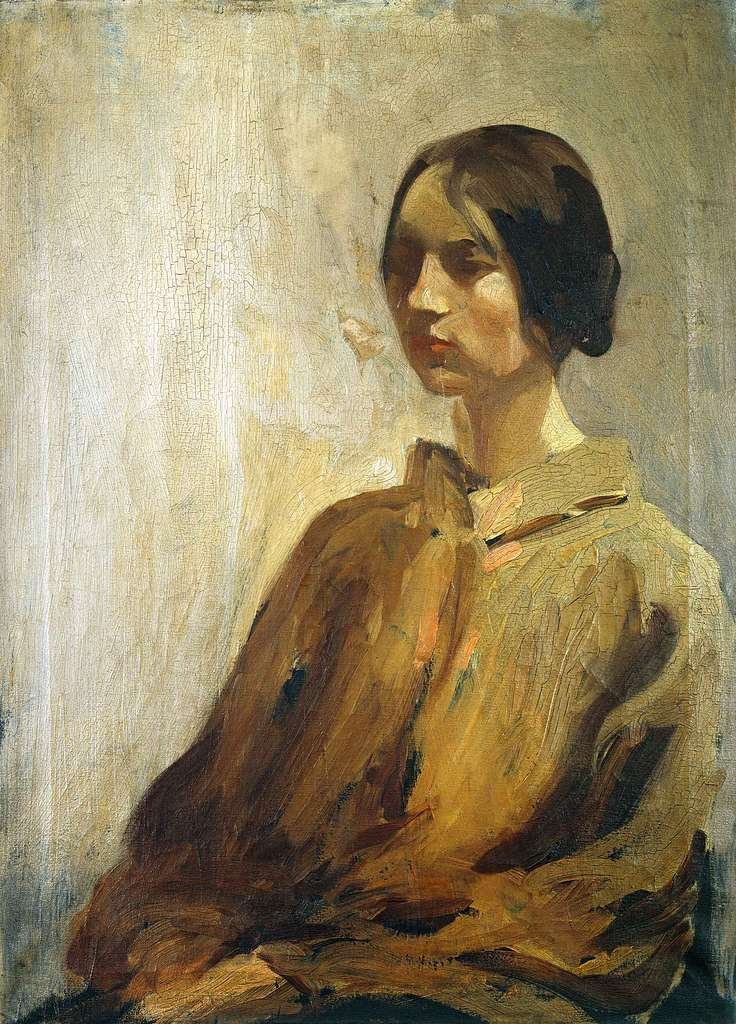
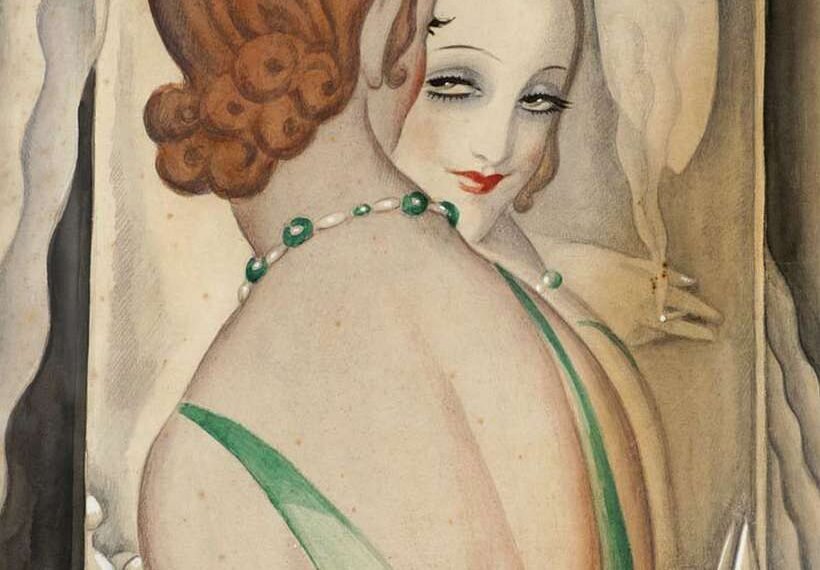
French Girl 1920s Oil on canvas
Between 1921 and 1925, Neel studied at the Philadelphia School of Design for Women, now the Moore College of Art and Design, where she likely made this work. One of Neel’s earliest extant paintings, French Girl reflects Neel’s own budding skills as an artist as much as it does the style and philosophy of one of the school’s most storied professors, Robert Henri (1865–1929), who taught there between 1892 and 1895 and whose book The Art Spirit (1923) Neel read avidly. Working from a model, Neel fuses, as per Henri, careful observation with painterly feeling.
Neel worked as a figurative painter in an age obsessed with abstraction. Her line is spare but firm, her brushwork loose but purposeful. She tilted faces, let bodies slump, and used distortion to reveal emotion, not mock it. Her apartments became studios; her sitters were friends, lovers, neighbors. Each painting feels like conversation turned into color. Critics describe her work as expressionistic and psychologically acute.
(Smithsonian Magazine, 2021)
The Times She Lived In
Her life spanned the Great Depression, McCarthyism, the civil rights movement, and the feminist and gay liberation waves of the 1960s and 1970s. She settled in Spanish Harlem in 1938 and painted people outside elite circles—working-class families, single mothers, activists, and queer artists. For decades she showed rarely. Her rediscovery in the 1970s came through feminist and progressive networks that recognized her portraits as acts of resistance to both sexism and aesthetic conformity.
(Whitney Museum: Alice Neel, People Come First)
Why Her Work Matters to LGBTQ+ History
Neel painted queer subjects when visibility could still cost careers and safety. She didn’t romanticize or sensationalize. Her portraits of drag performer Jackie Curtis, gay curator Henry Geldzahler, and other downtown figures present them as complex, ordinary, and present. She created domestic visibility long before mainstream acceptance—documenting the texture of queer life rather than its headlines. Her work aligns with LGBTQ+ history because it dignifies difference without apology.
(David Zwirner Gallery)
What the Paintings Do
Her portraits humanize. They slow you down. In Andy Warhol (1970) she painted the artist shirtless, scars visible after a shooting—stripped of persona. In Jackie Curtis as a Boy she captured gender fluidity as quiet truth. Each portrait shifts queerness from performance to presence, showing how the private self survives beneath public expectation.
(The Met Collection Overview)
Key Works and Sources
| Title | Year | Holding Institution / Record | Image & Rights Note |
|---|---|---|---|
| Nancy and Olivia | 1967 | Guggenheim Museum Bilbao / Artsy | Viewable on museum and Artsy pages. © The Estate of Alice Neel. |
| Henry Geldzahler | 1967 | The Metropolitan Museum of Art | High-res image available; © The Estate of Alice Neel. |
| Andy Warhol | 1970 | The Met Museum / Whitney Exhibition Record | Museum page shows details; © estate or lender. |
| Jackie Curtis as a Boy | 1972 | The Metropolitan Museum of Art / David Zwirner Gallery | Viewable on museum and gallery pages; reproduction requires permission. |
| Jackie Curtis and Ritta Redd | 1970 | Kunstmuseum Den Haag | Museum page includes image and description; © estate. |
| Sam | 1979 | The Metropolitan Museum of Art | Some Neel works in the Met are flagged as Open Access metadata; verify rights before reuse. |
Image and Rights Notes
Alice Neel died in 1984, and nearly all her works remain under copyright held by her estate. None are public domain. The Met Museum includes several entries with Open Access metadata, but most images still list © The Estate of Alice Neel.
(Estate of Alice Neel)
Legacy and Continuation
Neel painted people as they were, not as the culture wanted them to be. In a century that erased difference, she insisted on visibility. Her portraits are archives of the unvarnished body—aging, queer, pregnant, political. From today’s LGBTQ+ perspective, that refusal to idealize reads as moral clarity. Her canvases record the ordinary courage of being seen.
(Whitney Museum Retrospective)
Sources and Further Reading
- The New Yorker: Alice Neel’s Portraits of Difference
- Smithsonian Magazine: Alice Neel’s People
- The Met Museum Collection Pages
- David Zwirner Gallery
- Whitney Museum: People Come First
- Estate of Alice Neel Official Site