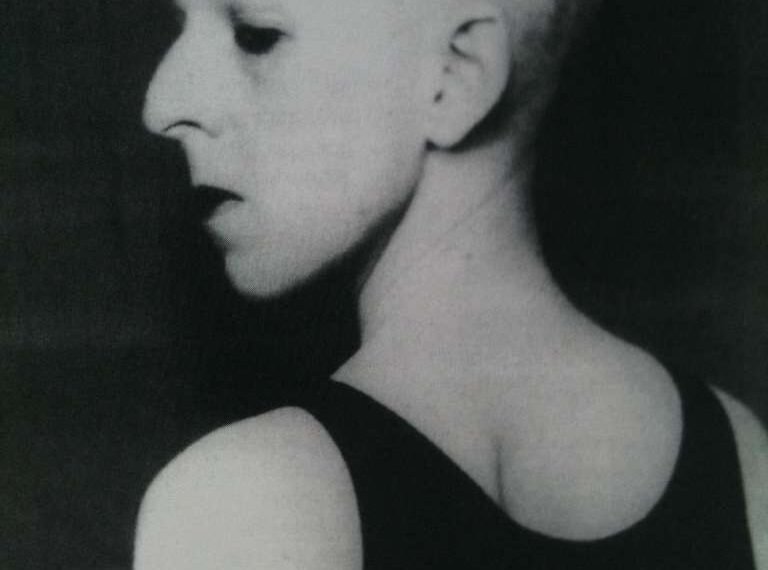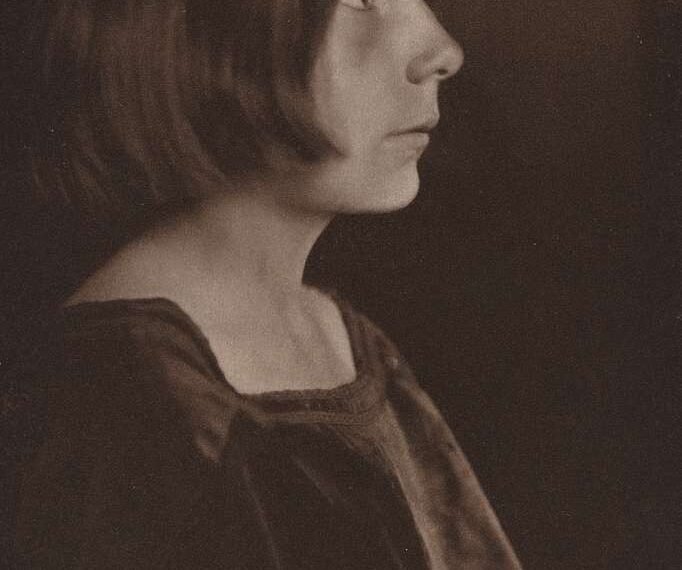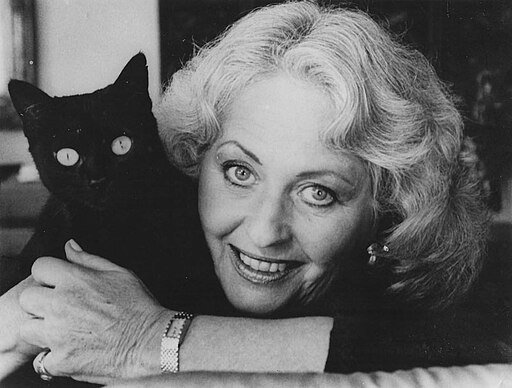
Barbara Hammer (1939–2019) changed what cinema could show and who it could show it for. Long before “representation” became a mainstream demand, Hammer built an entire body of work around lesbian identity, eroticism, and history. Her films made queer lives not only visible but unapologetically central.
She is often described as the first openly lesbian experimental filmmaker, but that label understates her impact. Hammer didn’t only make films about lesbians. She used the camera as a tool to rewrite who gets to record history.
A Life in Experimentation
Born in Hollywood, California, in 1939, Hammer grew up amid the machinery of American cinema but found little reflection of her own life in it. By the early 1970s, she was studying film and discovering feminism, queer theory, and experimental art. She soon began making short films that turned away from the heteronormative gaze that dominated both Hollywood and even much of avant-garde cinema.
Over her career, Hammer created more than 80 moving-image works, as well as photographs, installations, and performances. Her focus never drifted far from questions of body, desire, illness, and the politics of seeing.
Her work, and her life, were rooted in the belief that lesbian experience deserved visibility on its own terms—not as token, not as metaphor, but as reality.
Key Works
Below are some of Hammer’s most influential films, each essential to understanding her contribution to queer cinema and visual culture.
| Film | Year | What it does / what’s important in LGBTQ+ terms |
|---|---|---|
| Dyketactics | 1974 | Among the first lesbian-made films to show sex between women, it reclaims erotic imagery from the male gaze. The film celebrates women’s bodies and lesbian intimacy through experimental editing and natural light. barbarahammer.com |
| Women I Love | 1976 | A portrait film intercutting footage of Hammer’s friends and lovers with sensual imagery from nature. It becomes a collage of lesbian community and affection, rejecting invisibility. barbarahammer.com |
| Multiple Orgasm | 1976 | An explicit, humorous, and unapologetic exploration of female pleasure. It treats women’s sexuality as subject rather than spectacle. Independent obituary |
| Nitrate Kisses | 1992 | Her best-known feature-length film and the first part of her “History Trilogy.” It weaves archival footage, queer couples, and recovered histories into a meditation on memory and erasure. barbarahammer.com |
| Tender Fictions | 1995 | A self-portrait exploring autobiography, identity, and narrative control. Hammer reflects on what it means to tell one’s story in a culture that erases queer lives. Wikipedia |
| History Lessons | 2000 | The final part of the trilogy, this film digs into censorship, queer representation, and the rewriting of history through media and archives. Wikipedia |
| A Horse Is Not a Metaphor | 2008 | Created after her cancer diagnosis, this film explores illness, embodiment, and survival. It’s both deeply personal and universally political. barbarahammer.com |
| Evidentiary Bodies | 2018 | One of her last works, examining the physical traces that remain after pain, ageing, and illness. A meditation on the body as record. barbarahammer.com |
Reclaiming the Image
Hammer’s early films were raw, sensual, and confrontational. In Dyketactics, for instance, the camera doesn’t hide or fetishize; it participates. Her vision rejects the detached observer’s eye and instead insists on intimacy. She once said she wanted to “see lesbians making love on screen before I die.” That urgency for visibility shaped her life’s work.
The mid-1990s marked a shift from erotic experimentation to historical reclamation. With Nitrate Kisses, she uncovered the lives of LGBTQ+ people written out of archives and censored from public memory. She followed that with Tender Fictions and History Lessons, collectively known as her “History Trilogy.” These works mix documentary, essay, and collage, insisting that queer history is neither marginal nor secondary—it is the story of resistance itself.
The Body as Archive
In later years, Hammer turned her lens inward. Living with ovarian cancer, she confronted the limits of the body with the same openness she once brought to sex and politics. A Horse Is Not a Metaphor and Evidentiary Bodies document not decline but persistence. She used her illness as another subject that demanded representation, challenging how art depicts ageing and mortality.
In one of her final interviews, she remarked that “bodies are evidence of experience.” For Hammer, to film the body—pleasured, ill, decaying—was to preserve it from erasure.
Critique and Complexity
Some critics questioned Hammer’s use of natural imagery and recurring symbols, arguing they romanticized or essentialized femininity. She countered that those images were acts of reclamation. In her words, “I was making films that the culture never allowed me to see.”
Her formal style—fragmented, nonlinear, visually dense—was also challenging for many viewers. Yet her refusal to simplify was itself political. She believed queer stories deserved their own forms, not softened versions of mainstream storytelling.
Influence and Legacy
Barbara Hammer’s influence reaches across generations of queer artists and filmmakers. She showed that personal art can be political, that eroticism can be intellectual, and that visibility is an act of resistance.
Her complete archive—films, photographs, journals, and drawings—is housed at Yale’s Beinecke Rare Book & Manuscript Library, giving scholars and artists access to decades of creative experimentation (Yale News).
Hammer also created grants to support lesbian experimental filmmakers, ensuring the next wave of queer artists could continue the work she began. Her films have been exhibited at the Museum of Modern Art, Tate Modern, Jeu de Paume, and dozens of international festivals.
Where to Watch and Learn
- Official site: barbarahammer.com
- Nitrate Kisses: Film page
- Tender Fictions: Women Make Movies catalog
- Archive: Yale Beinecke Library
Barbara Hammer’s camera did not look at queer lives—it looked from within them. Her work remains a challenge to how we see, what we remember, and who gets to speak. For LGBTQ+ viewers, her films still feel like an act of recognition, an assertion that our histories, our bodies, and our pleasures are worth recording.