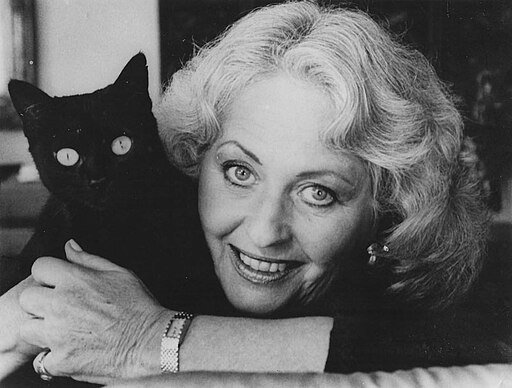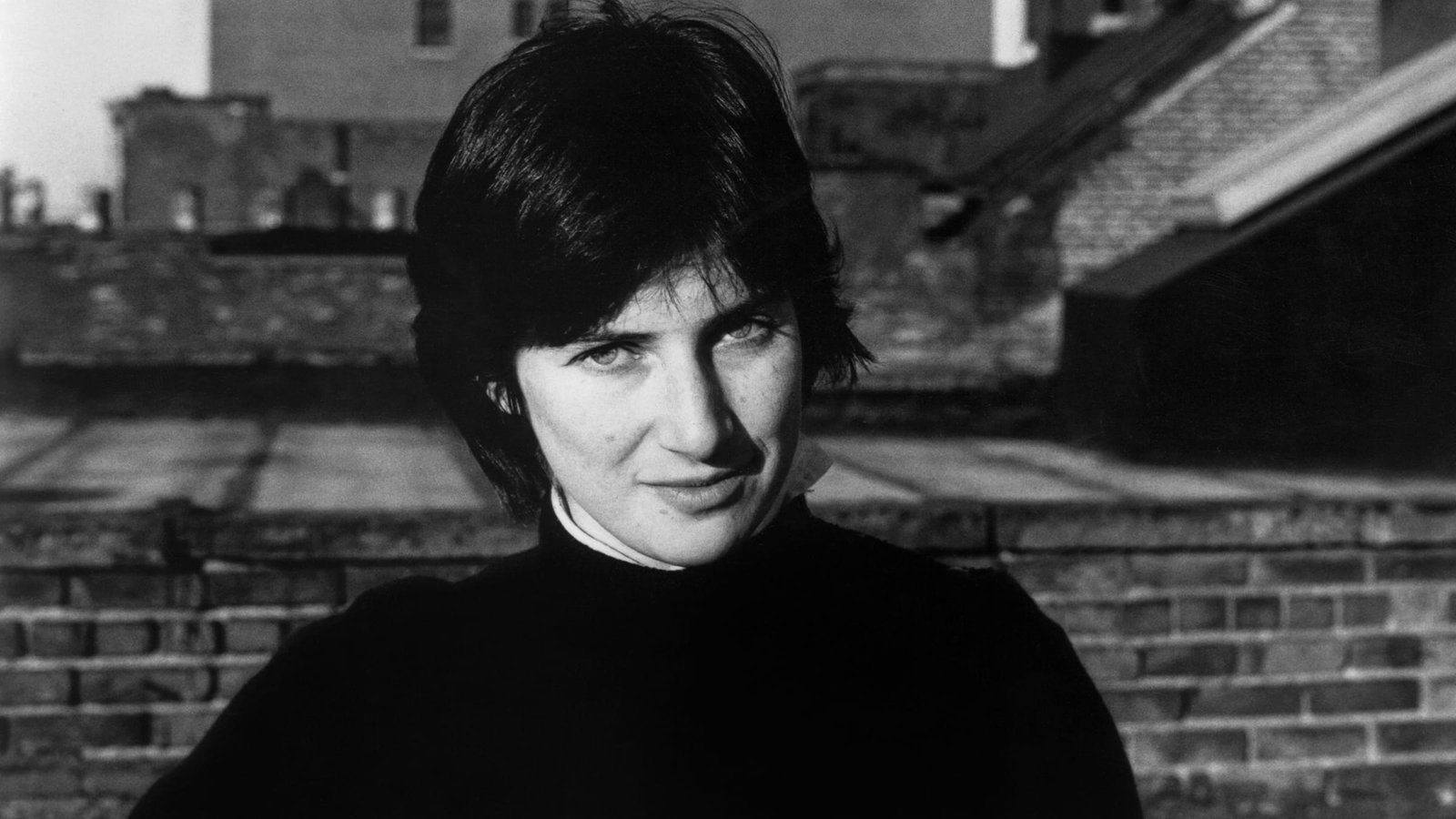
Chantal Akerman, 2009 – Photo by Christophe Delloye / Wikimedia Commons (CC BY-SA 3.0)
Few filmmakers have shaped queer cinema as deeply and quietly as Chantal Akerman (1950–2015). Born in Brussels to Polish-Jewish parents who survived the Holocaust, Akerman made films that questioned every assumption about time, intimacy, and the boundaries of daily life. Her work is both political and deeply personal, feminist and queer, minimalist and emotional.
Akerman’s films are not loud about sexuality. They whisper it through gestures, silence, and long takes. Her characters often live in small spaces, cooking, eating, reading, or waiting — and through them, Akerman reshaped how the camera could see women and desire.
Queer Perspectives: Desire and Domesticity
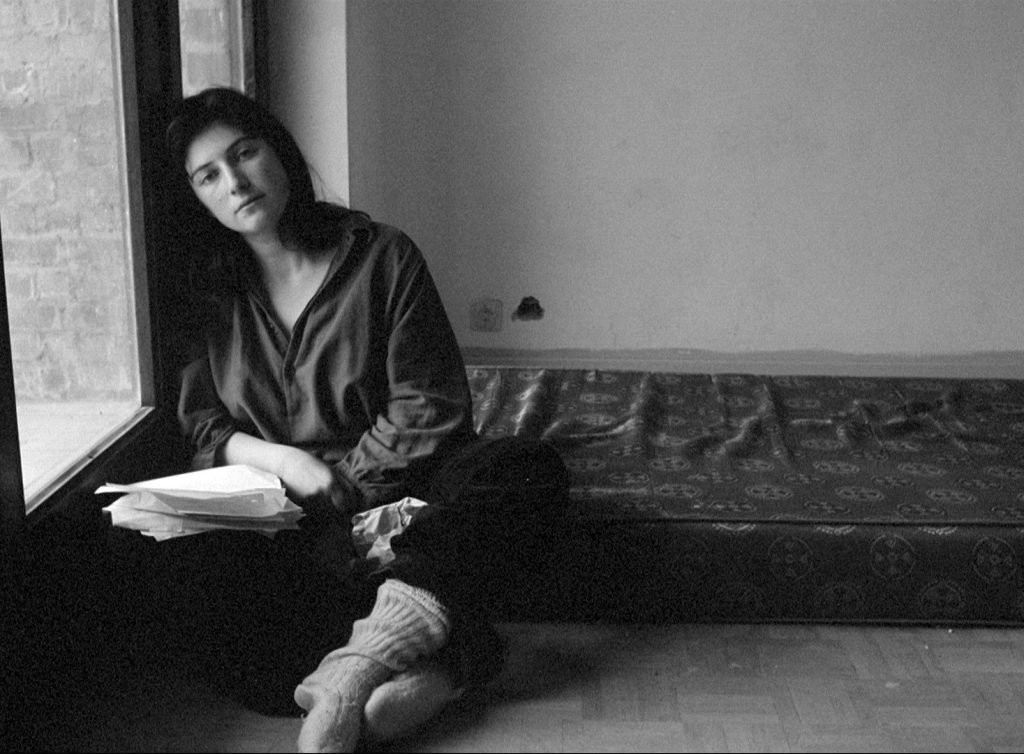
Still from “Je tu il elle” (1974) – Wikimedia Commons (Public Domain)
Akerman’s Je tu il elle (1974) remains a landmark of queer cinema. It ends with one of the first extended lesbian love scenes in European film history — tender, unsentimental, and free of moralizing. It doesn’t explain or justify desire. It simply shows it.
In Jeanne Dielman, 23 quai du Commerce, 1080 Bruxelles (1975), Akerman filmed a single mother’s daily routine with precision and patience. Behind the repetition of domestic labor lies a quiet rebellion — against patriarchy, against cinematic expectation, and against the erasure of women’s private lives. For queer viewers, this attention to interior space feels familiar: it’s about survival, identity, and the longing for authenticity within confinement.
Chantal Akerman and Queer Time
Akerman’s pacing — long shots, slow action, repetition — can feel disorienting to viewers trained on fast editing. But for many queer theorists, this “slowness” represents a radical reclaiming of time. It mirrors queer experience: time outside reproduction, family structures, or cinematic convention.
Her later works, including No Home Movie (2015), return to intimate spaces — conversations with her mother, memories of loss and exile — forming a full circle between public art and private identity.
Chart of Key Works
| Film | Year | Significance |
|---|---|---|
| Saute ma ville | 1968 | Her first short film, explosive and anarchic; a young woman destroys her kitchen — and symbolic domesticity. |
| Je tu il elle | 1974 | Explicitly queer film; features one of cinema’s earliest lesbian love scenes. |
| Jeanne Dielman, 23 quai du Commerce, 1080 Bruxelles | 1975 | Three-hour portrait of domestic routine; hailed by Sight and Sound in 2022 as “the greatest film of all time.” |
| News from Home | 1976 | Combines shots of New York with letters from her mother; explores distance, identity, and belonging. |
| No Home Movie | 2015 | Her final film, capturing video conversations with her mother; tender, personal, and reflective of queer temporality. |
Legacy and LGBTQ+ Impact
Akerman never marketed herself as a “lesbian filmmaker,” but her influence on queer cinema is immense. She redefined intimacy, made space for female and queer desire, and proved that silence can be political.
For LGBTQ+ audiences, Akerman’s films remain a mirror: they show what it means to exist between categories, to build identity from fragments of time and gesture. Her work offers comfort and confrontation in equal measure — an invitation to look longer, and feel more.
Explore Further
- Chantal Akerman Foundation: www.chantalakerman.foundation
- BFI Essay – Akerman for Beginners: bfi.org.uk
- Criterion Collection Director Spotlight: criterion.com
Image Credits (all public domain or CC BY-SA)
- Chantal Akerman portrait, 2009 – Christophe Delloye / Wikimedia Commons (CC BY-SA 3.0)
- Still from Je tu il elle (1974) – Wikimedia Commons (Public Domain)
- Still from News from Home (1976) – Wikimedia Commons (Public Domain)
- Akerman editing room photo, 1970s – Wikimedia Commons (Public Domain)