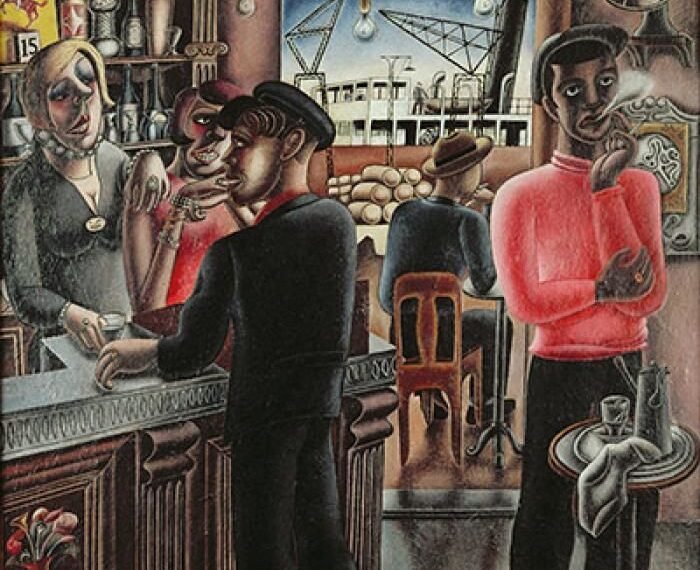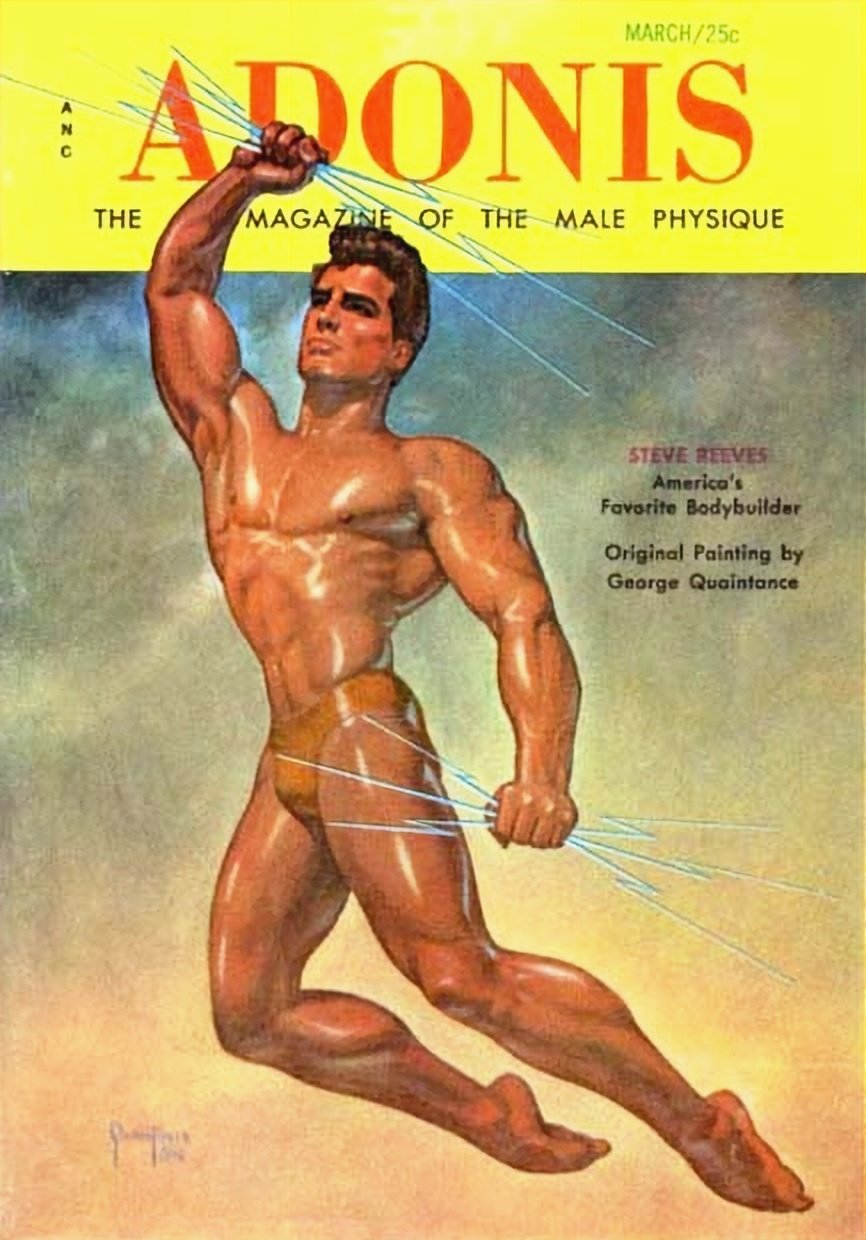
Cover of March 1957 issue of Adonis magazine, featuring artwork by George Quaintance. Want the mug? https://gayriot.shop/products/adonis-mug
George Quaintance painted a world that many queer people of his time could not live openly. Born June 3, 1902, in Alma, Page County, Virginia, he grew up on a farm before moving north to study at the Art Students League in New York. Over the course of his life, he built a career that blended commercial illustration, calendar art, and private commissions. By the 1940s and 50s, he had established studios first at his Arizona property, Rancho Siesta, and later in Los Angeles, California, where he lived and worked until his death on November 8, 1957.
Quaintance’s paintings were immediately recognizable. Muscular, idealized men populate his canvases, posed in mythological, pastoral, or Western frontier settings. His use of classical and historical themes provided cover for what was, in fact, unapologetic homoerotic art. By embedding desire in Greco-Roman fantasies or cowboy narratives, he was able to depict the male body in ways that mainstream culture might accept as allegorical, even as queer audiences understood the real subject. These works often appeared in physique magazines or as glossy prints, circulated quietly through networks that allowed gay men to access them at a time when open representation was unthinkable.
From an LGBTQ+ perspective, Quaintance’s work carries a double charge. First, it eroticized the male body without apology. His men are strong, confident, and visible, presenting desire as legitimate rather than shameful. Second, he created an archetype—the macho, desirable male whose sexuality is directed toward other men. That archetype reverberated through queer visual culture and influenced later artists, most famously Tom of Finland, who carried the imagery into the more openly erotic art of the postwar decades. The Tom of Finland Foundation acknowledges Quaintance’s role in laying the groundwork for homoerotic art that would later become central to gay identity and visibility.
The cities and landscapes where Quaintance lived shaped his work. New York exposed him to formal training and commercial opportunities. Phoenix and his Rancho Siesta gave him a mythic Western backdrop, a visual vocabulary he exploited in cowboy and frontier scenes. Los Angeles provided access to collectors and a discreet gay subculture, giving him both patrons and protection. These moves situated him between rural mythologies and urban markets, producing a body of work that was at once distinctly American and quietly radical.
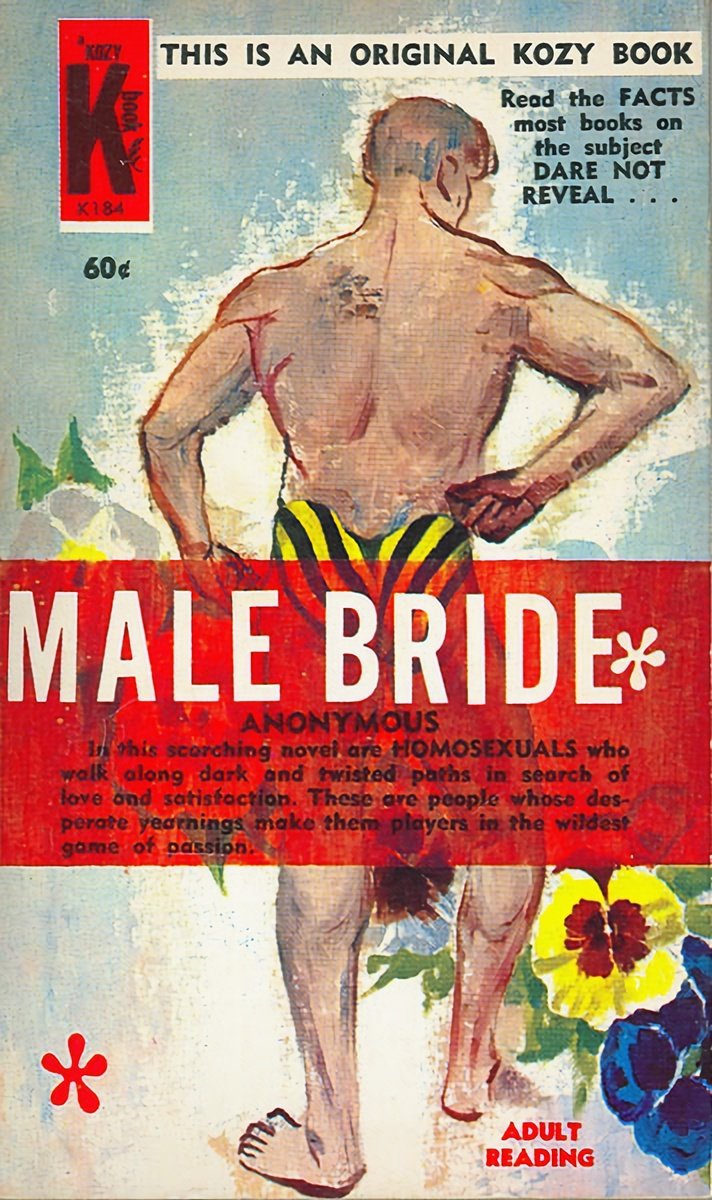
Anonymous cover, 1963. Want the mug? https://gayriot.shop/products/male-bride-pulp-fiction-mug
Quaintance’s art belongs to a moment when queer culture operated in coded ways. Physique magazines and pulp fiction novels, sold under the guise of fitness publications or in locations like news stands, were a lifeline for many gay men. His prints were traded discreetly, often mailed in plain envelopes. For collectors and casual readers alike, his art provided recognition and affirmation, even if only in private. That visibility mattered in a world where mainstream culture refused to acknowledge queer existence. It offered a mirror when few were available.
The strengths of his work are clear: technical skill, bold compositions, and a refusal to frame queer desire as tragic or pathological. Yet there are limits worth noting. His subjects are overwhelmingly white and idealized, embodying a narrow vision of masculinity. That selectivity reflects both the prejudices of his time and the restricted market for his art. Today, his work is read not only as an affirmation of desire but also as a record of the exclusions and omissions that shaped mid-20th-century queer aesthetics. Admiration and critique must go hand in hand.
In the decades after his death, Quaintance’s art lingered in private collections more than in galleries. For a long time, mainstream art history dismissed pulp and physique art as disposable. Only recently have curators and scholars reappraised his contribution. Exhibitions have placed him within the broader lineage of homoerotic art, while auctions and galleries continue to bring his works to light for new generations of viewers. His paintings now circulate not only as collectibles but also as cultural artifacts—evidence of how queer desire persisted, even when silenced.
Curated image set with links:
- Young cowboy figure print, “Young Stallion” on eBay
- Erotic print group, Link Auction Galleries
- Single erotic print, Bidsquare catalog entry
- Collection overview and exhibition context, It’s Nice That / Taschen
Further reading and resources:
- George Quaintance on Wikipedia
- GeorgeQuaintance.com – biography and studio history
- Artsy – George Quaintance profile with images and auction history
- Tom of Finland Foundation – exhibition notes and context
George Quaintance’s canvases invite both admiration and critical curiosity. They are not documents of everyday queer life but imaginative reconstructions, visions of beauty and strength at a time when such images were scarce. They affirm that queer desire has always sought expression and that even in the shadows, artists like Quaintance created mirrors for others to see themselves. His art reminds us that LGBTQ+ history is not only about political movements or urban enclaves but also about the creative defiance of individuals who dared to make desire visible.