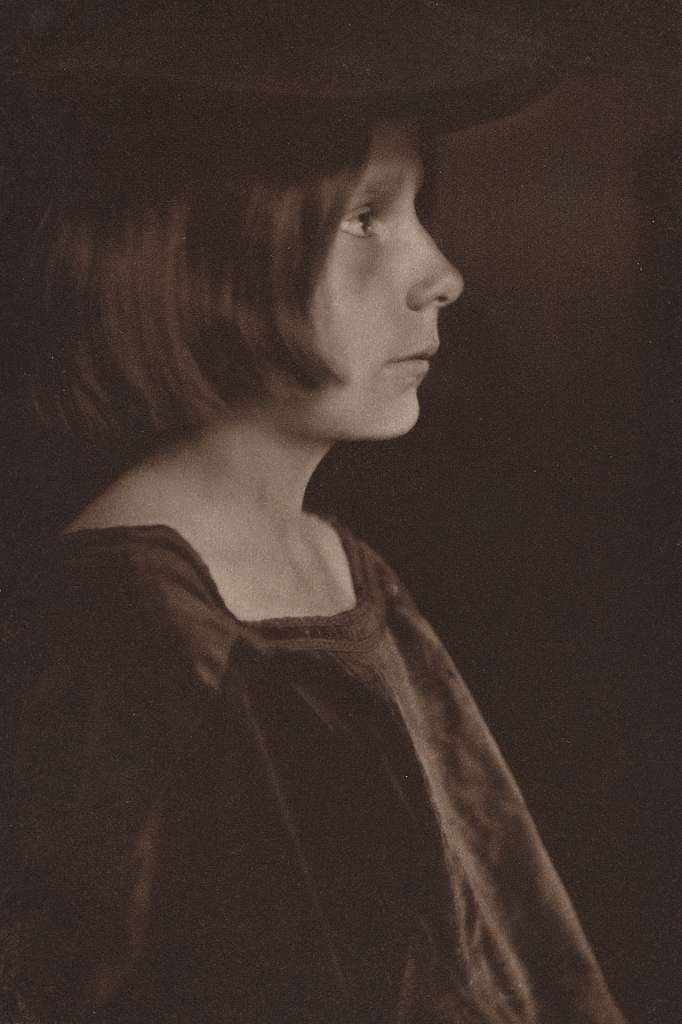
Florentine Boy, 1899
Gertrude Käsebier (1852–1934) was an American photographer who helped define photography as a legitimate fine art at the turn of the 20th century. Born Gertrude Stanton in Des Moines, Iowa, she began her artistic training later in life—first studying painting at the Pratt Institute before committing to photography. She opened her own portrait studio on Fifth Avenue in New York in 1897 and quickly achieved critical success.
https://en.wikipedia.org/wiki/Gertrude_K%C3%A4sebier
Käsebier became known for her deeply expressive portraits—especially her images of motherhood, children, and Native Americans—crafted with a soft, atmospheric Pictorialist style that emphasized emotional depth over documentary realism.
https://en.wikipedia.org/wiki/Gertrude_K%C3%A4sebier
She was also an important advocate for women in photography, promoting the profession as a viable career for women and helping found organizations like the Women’s Professional Photographers Association of America.
https://en.wikipedia.org/wiki/Gertrude_K%C3%A4sebier
Major Contributions
- Advancing Photography as Fine Art: Käsebier was a founding member of the Photo-Secession movement and had her work featured in Alfred Stieglitz’s Camera Work.
- Portraiture with Psychological Insight: She rejected artificial studio conventions in favor of emotional presence and individuality.
- Depictions of Marginalized Subjects: Her portraits of Sioux Native Americans emphasized dignity and personhood rather than stereotype.
https://www.si.edu/object/photographic-history-collection-gertrude-kasebier-collection%3Anmah_1343903
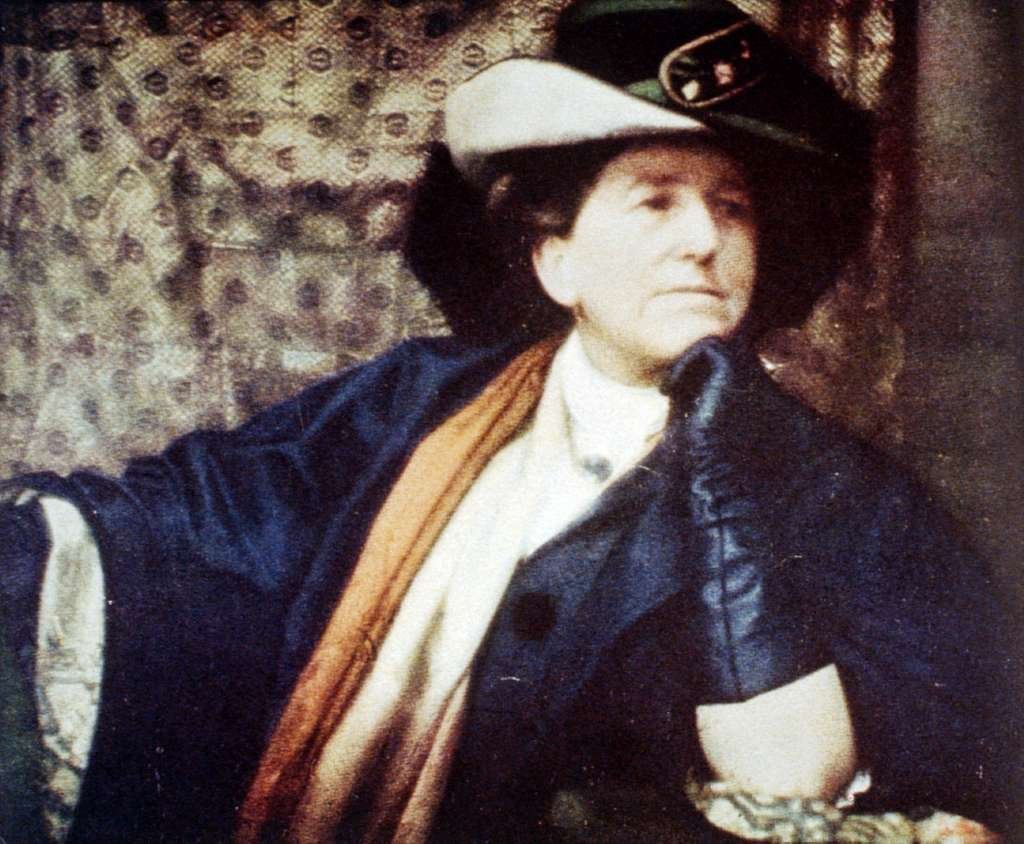
Facsimile of a photograph in color of Mrs. Gertrude Käsebier. Color half-tone plate engraving. Originally published in Century Magazine, January 1908.
The Female Perspective in Portrait Art
What is the Female Gaze?
The female gaze in art refers to ways of seeing shaped by women’s lived experiences—often prioritizing empathy, subjectivity, relationality, and interior life rather than domination or objectification.
https://www.feministart.ca/learn-more/female-gaze
This perspective matters because:
- It challenges historical traditions in which women were primarily objects of depiction rather than agents of meaning
- It expands portraiture to include emotional, domestic, and psychological realities long dismissed as “minor” subjects
- It destabilizes the assumption that there is a single, neutral (often male) way of seeing
Käsebier’s portraits exemplify this shift. Her images of mothers and children, in particular, resist sentimentality by focusing on reciprocity and emotional gravity rather than idealized femininity.
https://www.museoreinasofia.es/en/collections/artwork/blessed-art-thou-among-women
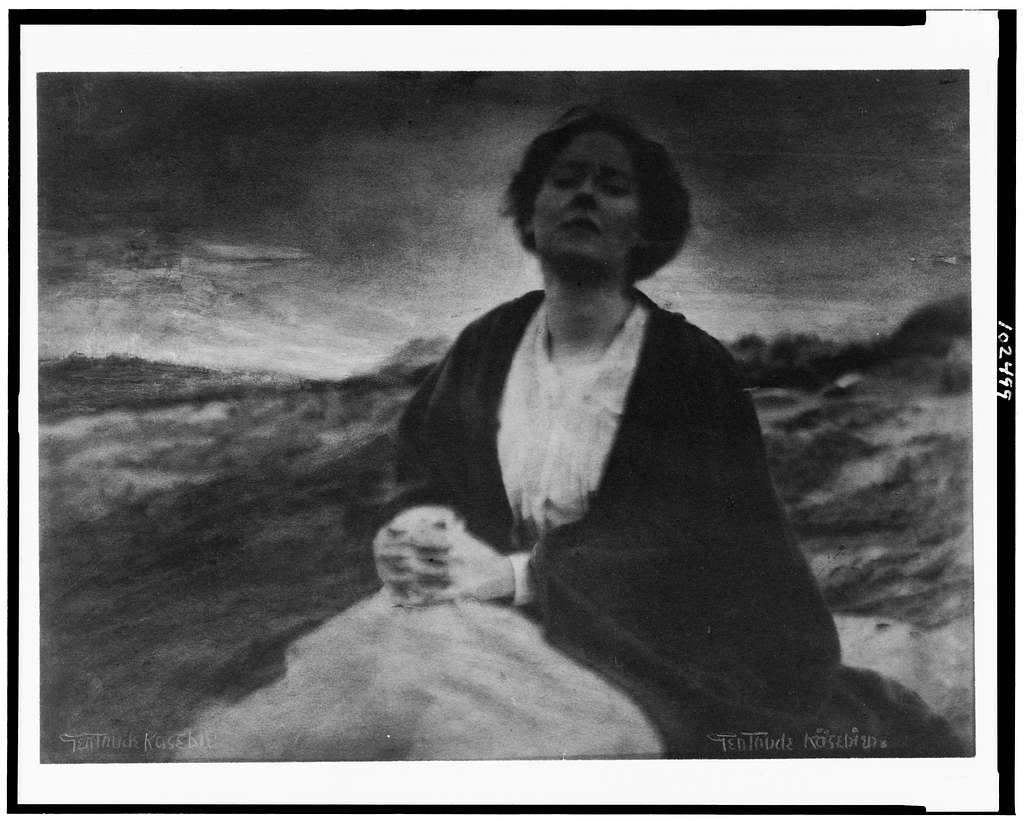
The Heritage of Motherhood, year unknown
Why the Female Perspective Matters to LGBTQ+Representation
Although Käsebier did not explicitly address LGBTQ identities—terms and visibility were limited in her era—her approach to portraiture has become increasingly relevant to queer visual culture.
- Reclaiming Vision: Feminist challenges to patriarchal representation parallel queer efforts to resist heteronormative ways of seeing. Portraits that emphasize interiority and dignity help create visual space for identities outside dominant norms.
- Queer and Lesbian Gazes: Later LGBTQ photographers developed visual strategies that echo Käsebier’s refusal to objectify—foregrounding emotional truth, chosen kinship, and nontraditional intimacy.
- Visibility and Personhood: Art that insists on the subject’s humanity rather than spectacle supports broader struggles for LGBTQ recognition and self-definition.
Scholars of queer visual culture often point out that how someone is seen can be as politically important as whether they are seen at all.
Feminist and Queer Receptions of Käsebier’s Work (Later Art History)
From the mid-20th century onward, Gertrude Käsebier’s reputation has been reassessed and reclaimed by feminist art historians, and more recently, her work has been engaged within queer and intersectional frameworks.
Feminist Art History
Early photographic histories often marginalized Käsebier, framing her primarily in relation to Alfred Stieglitz or the Photo-Secession rather than as an independent innovator. Feminist scholars in the 1970s–1990s challenged this narrative, emphasizing:
- Her role as a professional woman artist who openly argued that photography could provide women with financial and creative autonomy
- Her resistance to male-dominated definitions of artistic value, particularly her disagreement with Stieglitz over the commercial viability of portraiture
- Her centering of women’s lived experiences—especially motherhood—as serious artistic subjects rather than sentimental ones
Institutions such as the National Museum of Women in the Arts have been central to restoring Käsebier’s standing as a foundational figure in feminist photography history.
https://nmwa.org/art/artists/gertrude-kasebier/
Queer and Intersectional Readings
More recent scholarship has extended feminist analysis by asking how Käsebier’s work contributes to non-normative ways of seeing identity and intimacy:
- Her portraits often avoid rigid gender performance, emphasizing emotional states over social roles
- Her focus on relational bonds rather than heterosexual romance aligns with later queer critiques of compulsory heterosexuality
- Her dignified portrayal of marginalized subjects (including Native American sitters) anticipates intersectional approaches that consider overlapping systems of power
While Käsebier herself should not be retroactively labeled as a “queer artist,” her work is now understood as part of a visual lineage that made queer and feminist representation possible—by insisting that portraiture could honor complexity, vulnerability, and selfhood.
This kind of retrospective reading is common in queer art history, which often traces conditions of possibility rather than direct identity claims.
https://scholarcommons.sc.edu/cgi/viewcontent.cgi?article=1558&context=senior_theses
Key Works by Gertrude Käsebier and Their Importance
| Work | Date | Description | Why It Matters |
|---|---|---|---|
| Blessed Art Thou Among Women | c.1899 | Mother and daughter in an intimate, emotionally charged composition | Landmark example of female-centered portraiture and emotional reciprocity |
| The Manger | c.1899 | Spiritualized portrait of woman and child | Demonstrates photography’s ability to convey symbolic and psychological depth |
| Portrait of Eulabee Dix | c.1910 | Portrait of a woman artist | Depicts women as creative agents rather than decorative subjects |
| Sioux Portrait Series | 1898–1912 | Individualized portraits of Native American sitters | Early resistance to ethnographic stereotyping |
| Portraits of Unknown Women | 1895–1903 | Studio portraits of everyday women | Expands the archive of who is considered worthy of representation |
Further Reading
- Gertrude Käsebier (Wikipedia):
https://en.wikipedia.org/wiki/Gertrude_K%C3%A4sebier - National Museum of Women in the Arts:
https://nmwa.org/art/artists/gertrude-kasebier/ - Museo Reina Sofía – Blessed Art Thou Among Women:
https://www.museoreinasofia.es/en/collections/artwork/blessed-art-thou-among-women