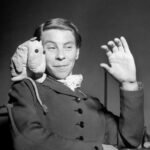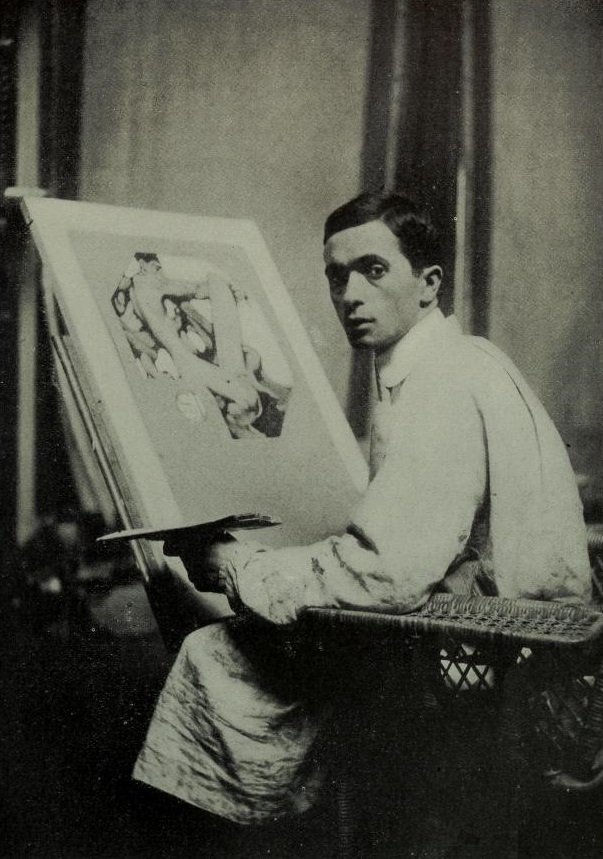
J.C. Leyendecker in his studio, 1905
Who Was Leyendecker?
Joseph Christian Leyendecker (1874–1951) was a German‑American illustrator and painter. He dominated commercial art in the early 20th century, creating imagery that shaped how America saw holidays, masculinity, and commercial design. He produced more than 400 magazine covers and advertising campaigns between 1895 and 1951. (Wikipedia)
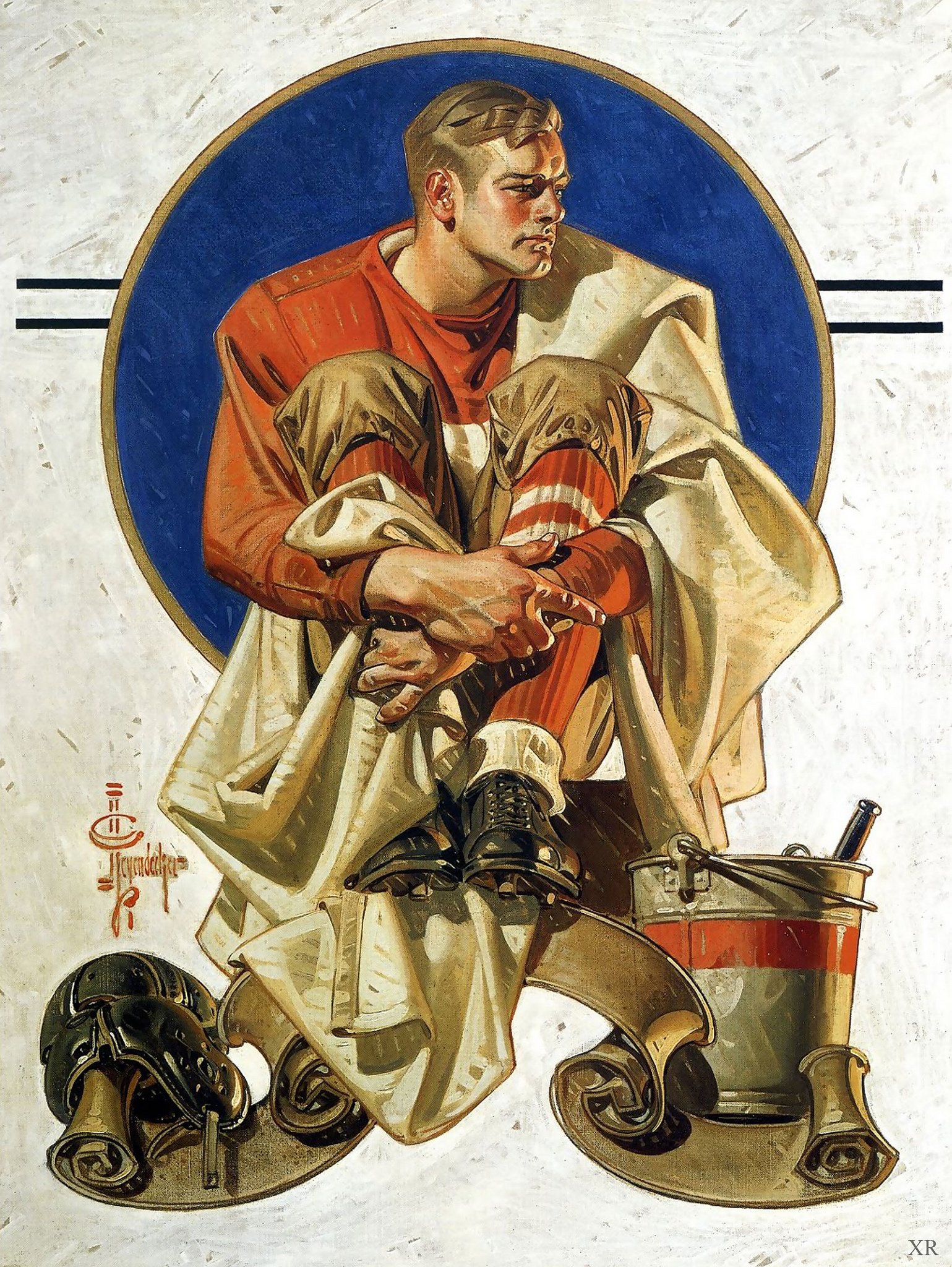
Football, date unknown
Leyendecker never married. He lived with Charles A. Beach, his partner from 1903 until his death in 1951. Beach was his primary model, business manager, and companion. Many historians describe their relationship as romantic and life‑long. (Wikipedia)
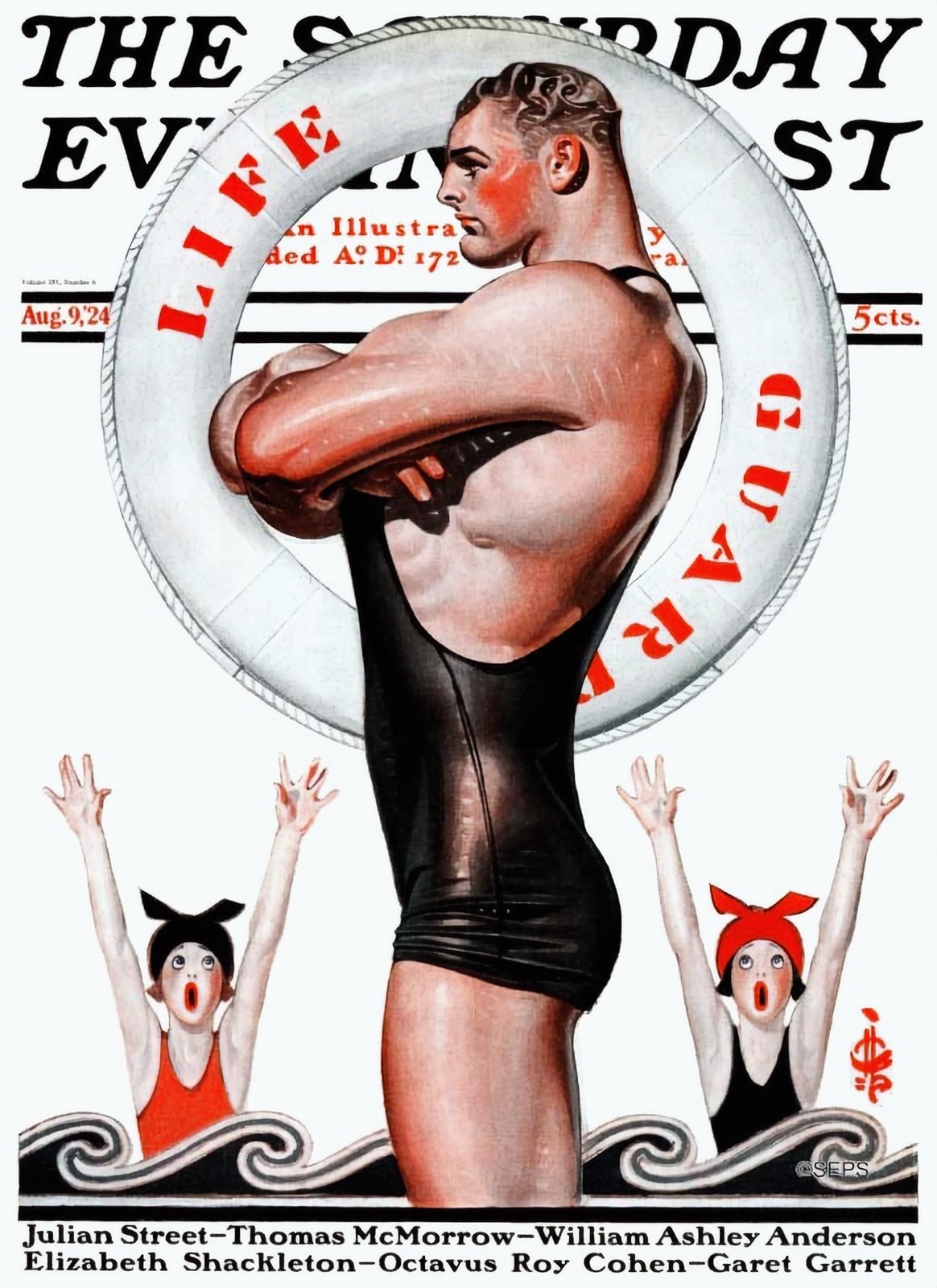
Saturday Evening Post Cover, 1924
At a time when being openly gay could ruin a career, Leyendecker’s personal life was discreet. He encoded affection and male beauty into his imagery, letting mainstream audiences see stylish, athletic figures while queer audiences could read subtle cues of intimacy. (Advocate.com)
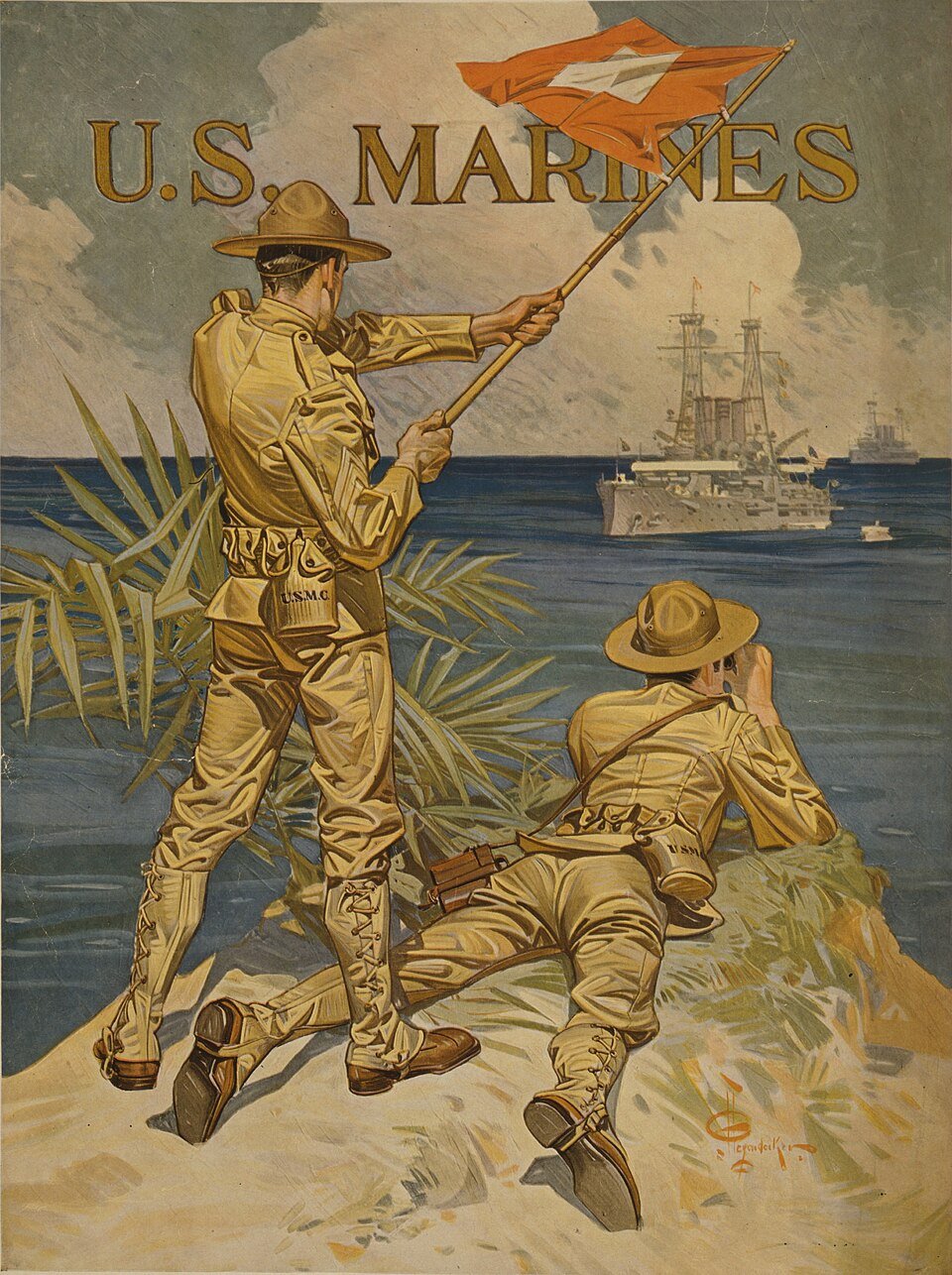
U.S. Marines, 1917
Why His Work Matters
Leyendecker’s images weren’t alternative art; they defined mainstream visual culture. He:
- Painted 322 covers for The Saturday Evening Post, more than any other artist before Norman Rockwell. (Wikipedia)
- Created the Arrow Collar Man, an idealized masculine figure that became a cultural icon. (Wikipedia)
- Cemented visual traditions for New Year’s Baby images, Santa Claus, and holiday covers. (illustratedgallery.com)
- Influenced Norman Rockwell, who acknowledged Leyendecker’s impact on his own work. (Wikipedia)
His illustrations blended commercial goals with personal expression. For instance, his male figures often carry homoerotic undertones—lean physiques, elegant posture, and the attentive gaze between men—which would have resonated with queer viewers while blending into the broader advertising world. (Advocate.com)
Charles A. Beach
Charles Beach (1881–1954) entered Leyendecker’s studio in 1903 as a model. He quickly became:
- Leyendecker’s main visual muse, especially for men’s fashion campaigns.
- Studio manager and business agent handling commissions and logistics.
- A prominent public feature of many illustrations, even if unnamed. (nyclgbtsites.org)
Beach’s likeness is present in hundreds of works, including Arrow Collar ads and mainstream magazine covers. In an era when queer relationships were rarely named, Leyendecker used Beach’s image to bring a coded same‑sex aesthetic into American visual culture. (qvoicenews.com)
Where You Can See His Work Today
Leyendecker originals and major pieces are held by museums and collections including:
- National Museum of American Illustration, Newport, Rhode Island (largest holdings). (Russell Collection)
- Haggin Museum, Stockton, California (over 40 originals in dedicated galleries). (hagginmuseum.org)
- Norman Rockwell Museum, Stockbridge, Massachusetts. (Wikipedia)
- Smithsonian American Art Museum (select works). (Russell Collection)
- Additional collections in major libraries and archives such as New York Public Library and Hagley Museum. (Wikipedia)
Chart of Key Works
Below is a simple timeline of major works, dates, and current holding locations when known:
| Work | Year | Original Venue | Where It Is Now |
|---|---|---|---|
| First Saturday Evening Post cover | 1899 | The Saturday Evening Post | Various archives (Wikipedia) |
| New Year’s Baby (iconic series begins) | 1907 | The Saturday Evening Post | Museums & private collections (illustratedgallery.com) |
| Arrow Collar Man campaign | ~1907–1930 | Cluett, Peabody & Co. ads | Museums & collectors (Russell Collection) |
| Kuppenheimer fashion ads | 1910s | Print advertising | Museums & archives (Wikipedia) |
| World War I recruitment posters | 1917 | Government commission | Military museums & collections (Wikipedia) |
| Last Saturday Evening Post cover | 1943 | The Saturday Evening Post | Archives and collectors (Wikipedia) |
Cultural Impact
Leyendecker helped shape modern magazine design and mainstream advertising aesthetics. His portrayals of masculinity, holiday imagery, and commercial narratives became templates for decades after his peak. (Wikipedia)
From an LGBTQ+ perspective, Leyendecker’s life and imagery reveal how queer creativity influenced mainstream visual culture in ways that were unspoken but deeply present. His partnership with Beach blended personal devotion with commercial success. Their story shows how LGBTQ+ people contributed to American culture even when society demanded silence. (qvoicenews.com)
Links for Further Reading
- Wikipedia entry on Leyendecker with timeline and major works. (Wikipedia)
- National Museum of American Illustration overview of Leyendecker holdings. (Wikipedia)
- Haggin Museum collection and exhibitions. (hagginmuseum.org)