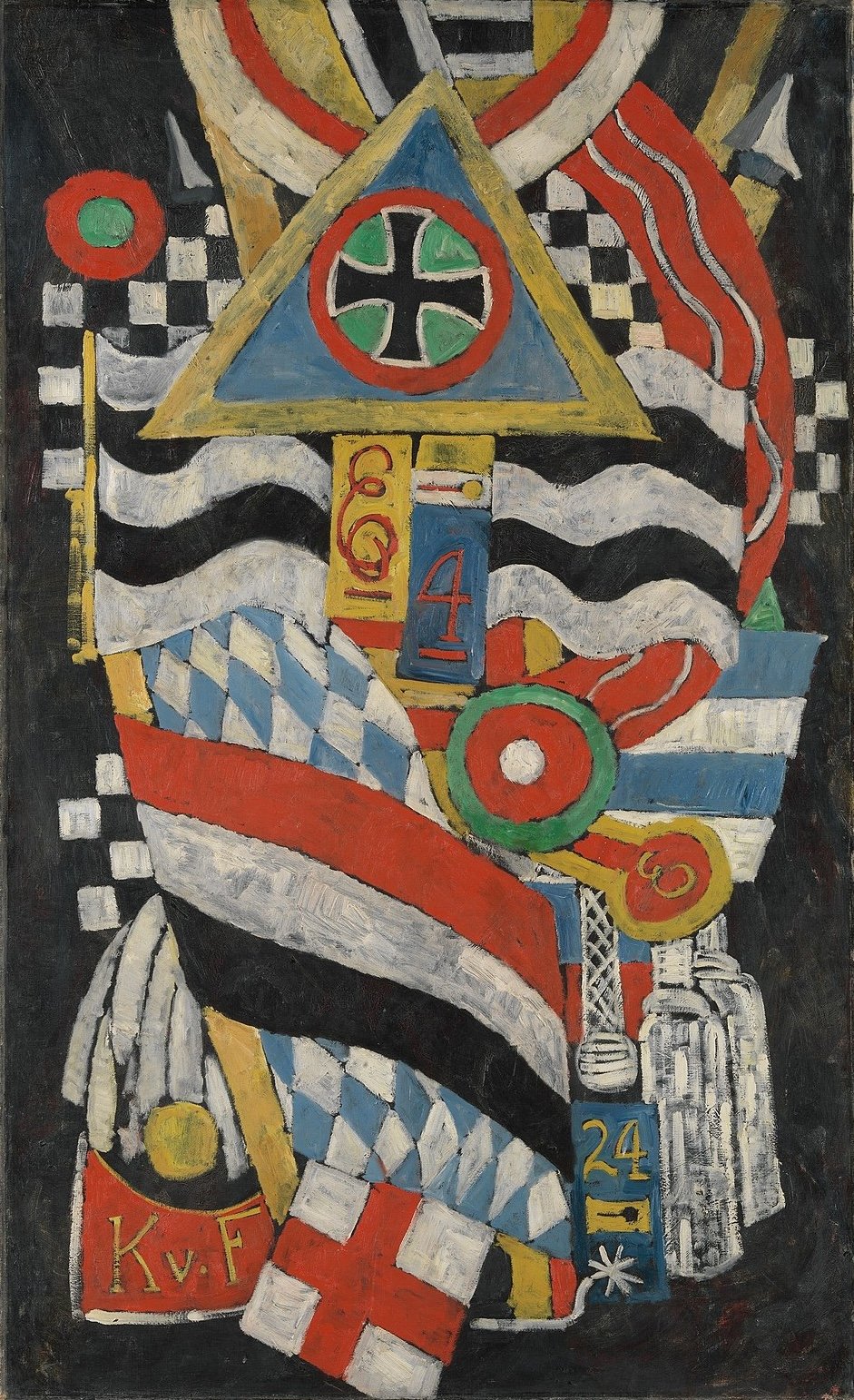
Portrait of a German Officer, Marsden Hartley, 1914
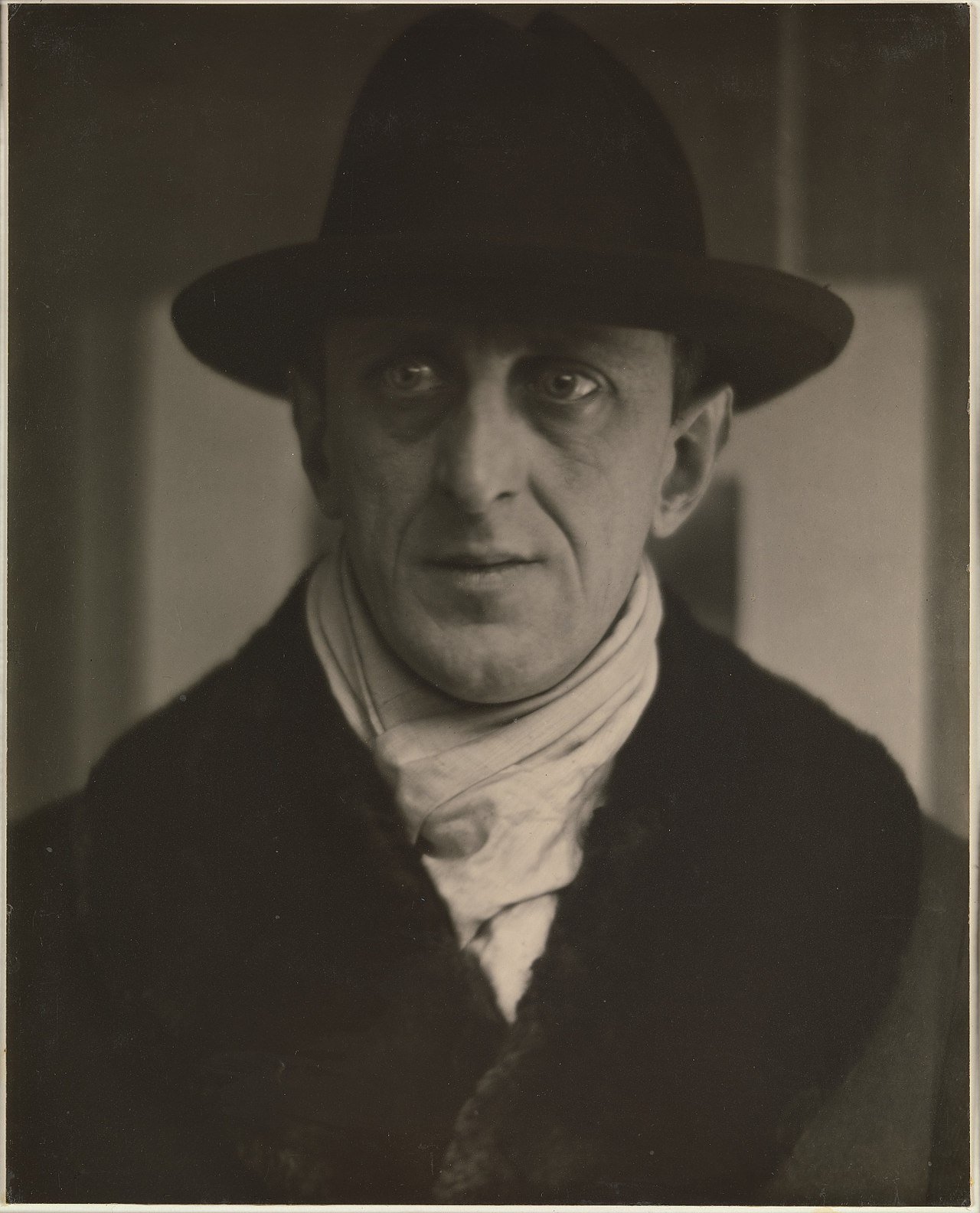
Marsden Hartley (by Alfred Stieglitz), 1916
Marsden Hartley was an American modernist painter (1877–1943) known for bold colors, strong shapes, and deeply personal work. He lived and worked in the U.S. and Europe, absorbing influences from Paris avant-garde circles and from German Expressionism and Cubism. His art spans landscapes, portraits, and highly symbolic abstract works. (The Art Story)
Karl von Freyburg was a young German lieutenant and cousin of Hartley’s friend Arnold Rönnebeck. Hartley met him in Berlin in 1913. Scholars believe the two had a romantic relationship, though the evidence is indirect because Hartley rarely spoke openly about his personal life. (The Art Story)
When World War I began, Freyburg was killed in action in 1914. Hartley was devastated and created a series of works that encoded his grief and love through abstract symbols and fragments rather than a literal portrait. (National Gallery of Art)
A key example is Portrait of a German Officer (1914), now at the Metropolitan Museum of Art. You can read more about it here: https://en.wikipedia.org/wiki/Portrait_of_a_German_Officer. Instead of painting a face, Hartley used initials (“KvF”), regimental numbers (4), age (24), flags, and an Iron Cross medal to stand in for Freyburg’s identity. These details act like a hidden signature of the man he loved. (Wikipedia)
Another work from this period is Berlin Abstraction (1914–15). It layers military motifs with coded references to Freyburg and to the atmosphere of Berlin’s modernist and gay subculture where Hartley felt freer than in the U.S. at the time. (Google Arts & Culture)
Why this matters to LGBTQ+ people today
Hartley’s work shows how queer artists of the early 20th century created private vocabularies of meaning to express feelings that could not safely be spoken publicly. In many places at that time, homosexual relationships were criminalized and socially condemned. Artists like Hartley embedded stories of love, loss, and identity in symbols that only some audiences could read. (Smithsonian Magazine)
This pattern of encoding personal truth resonates with many in the LGBTQ+ community now because it illustrates how people have historically preserved emotional and relational truth even under oppression. It’s a visual language of survival and memory that extends from private grief to public legacy.
Major Hartley works you should know
- Portrait of a German Officer (1914) – coded memorial for Karl von Freyburg. (Wikipedia)
- Berlin Abstraction (1914–15) – symbolic work linked to his Berlin experience and loss. (National Gallery of Art)
- The Warriors (1913) – earlier Berlin period work showing fascination with German pageantry. (The Metropolitan Museum of Art)
- Later landscapes and figures from Maine and elsewhere reflect his evolving style and life. (Wikipedia)
Hartley’s life and work show how personal experience and broader historical forces shape art. His coded works hold meaning on multiple levels, and for LGBTQ+ audiences they highlight how identity and affection have been expressed in times when open acknowledgement was impossible.