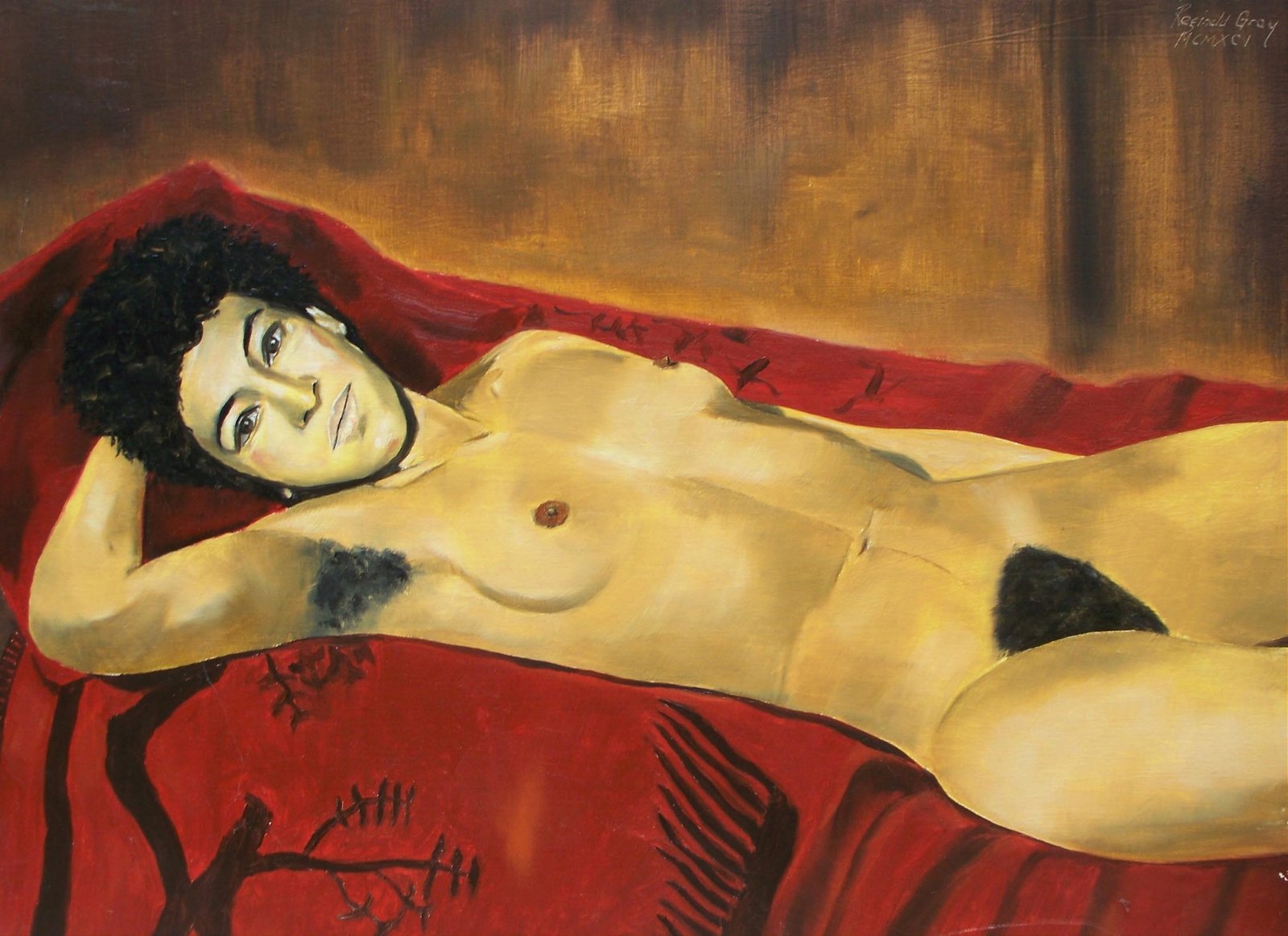
Isabelle, 1994
Reginald Gray (1930–2013) lived and painted between worlds—Irish and French, literary and visual, public and private. Though he was not publicly identified as queer, his life and work were deeply intertwined with the queer networks of 20th-century European art. He moved among Francis Bacon, Samuel Beckett, and Brendan Behan—men whose lives redefined identity and alienation in an age of censorship and repression.
For LGBTQ+ readers today, Gray’s story resonates as part of a broader lineage of artists who found belonging through art and exile.
Early Life in Dublin
Gray was born in Dublin in 1930 and raised in Blackrock. He studied at the National College of Art and Design and trained under Cecil ffrench Salkeld, linking Irish modernism to continental art.
He worked as a theatre designer for the Gate and Pike Theatres—spaces that offered creative freedom when Irish society still criminalized homosexuality. The theatre world drew many outsiders and queer individuals into its orbit.
By 1957, Gray left for London, joining the postwar wave of Irish artists and writers seeking space to live and think freely.
The Expatriate Years
London’s art scene introduced him to the School of London, a loose circle of figurative painters. Here he met Francis Bacon and other artists exploring human vulnerability.
In 1960, Gray painted Portrait from Life of Francis Bacon, capturing Bacon’s intensity without distortion. The work now resides at the National Portrait Gallery, London.
Soon after, Gray moved to Paris—a city that allowed him to work with quiet independence for nearly fifty years.
Life in Paris
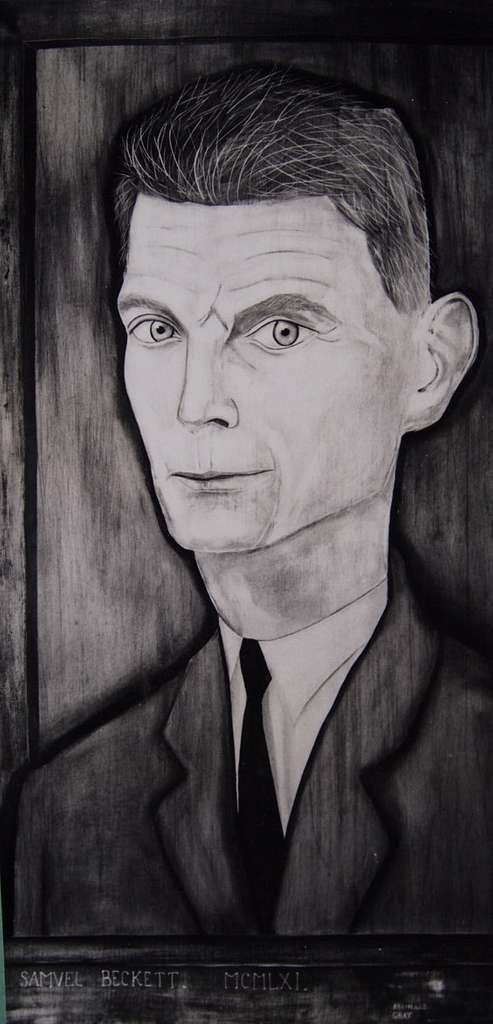
Portrait on wood panel of Irish writer Samuel Beckett. 1961
Paris’s Left Bank gave Gray the freedom that Dublin and London could not. Surrounded by writers, poets, and expatriate artists, he painted in egg tempera, a luminous and demanding medium that suited his precise style.
He exhibited across Europe and maintained friendships with Irish literary figures, especially Samuel Beckett, whose portrait became one of his defining works.
Key Works
| Work | Year | Significance |
|---|---|---|
| Portrait from Life of Francis Bacon | 1960 | Captures Bacon’s psychological depth without caricature. Mutual respect between two artists obsessed with the human face. View on Wikipedia |
| Portrait of Samuel Beckett | 1961–62 | Painted in Paris. A quiet image reflecting Beckett’s restraint and existential tension. View archive |
| The White Blouse (La Blouse Blanche) | 2006 | Winner of the Sandro Botticelli Prize in Florence; shows late-career mastery of light and stillness. Source |
| Portrait of the Poet Derry O’Sullivan | 2002 | Links Gray to the Irish exile tradition in Paris; lyrical and contemplative. View on Artmajeur |
Queer Context and Influence
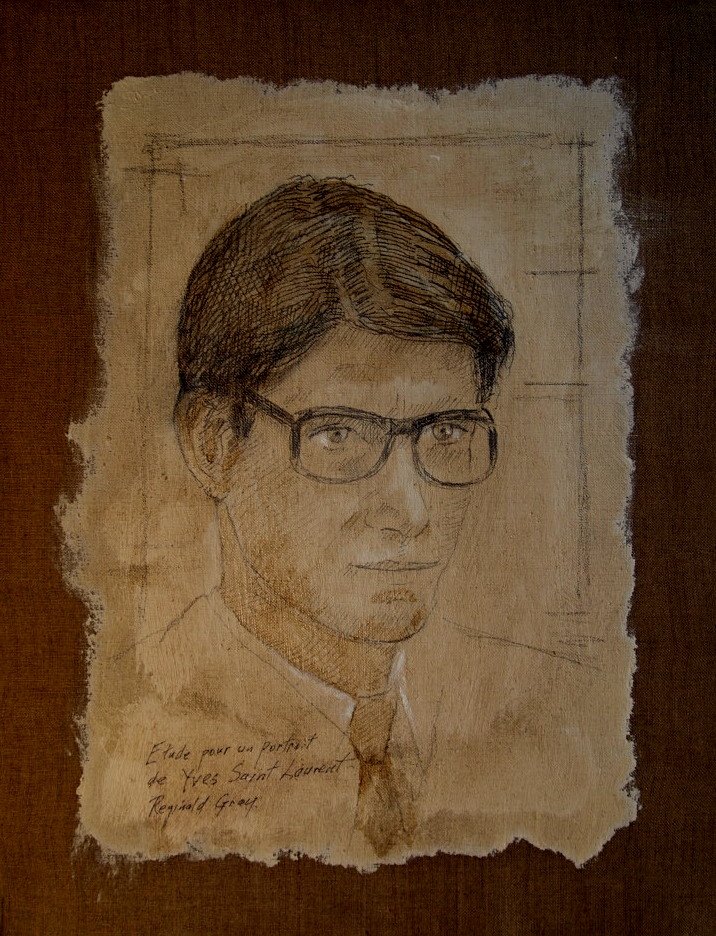
Study of Yves Saint Lauren, 1976
Although Gray did not publicly identify as LGBTQ+, his world was shaped by queer influence and sensibility.
Queer Circles. His friendships with Francis Bacon and Samuel Beckett embedded him in queer-adjacent networks. Bacon’s explicit queerness and Beckett’s fascination with alienation echo in Gray’s empathetic portraiture.
Theatre and Bohemia. His early career designing sets for the Gate and Pike Theatres placed him among Dublin’s bohemian community, one of the few social spaces where queer and non-conforming artists could thrive.
Portraiture as Intimacy. Where Bacon’s faces contort with anguish, Gray’s remain calm, searching, and dignified. His stillness feels radical—it allows identity to exist without spectacle.
Exile as Freedom. Gray’s move to Paris mirrored that of many queer artists who found privacy and expression abroad. His studio life there was a quiet form of liberation.
The Artist as Witness
Gray’s portraits are studies in endurance. His subjects often appear solitary, bathed in gentle light, their faces turned inward. They seem to carry private histories—stories of loss, longing, and belonging.
For queer viewers, this stillness reads as truth. His work doesn’t shout identity; it allows presence itself to be the statement.
Where to See His Work
Gray spent his final decades painting in his Paris studio, passing away in 2013.
Legacy
Reginald Gray remains an under-recognized figure bridging Irish art and European modernism. His portraits give space to those living beyond convention—artists, poets, and exiles whose identities shaped their work but rarely found public voice.
Seen through an LGBTQ+ lens, Gray’s life represents a quieter form of queer history: one of migration, chosen belonging, and the dignity of self-possession. His art proves that visibility doesn’t always demand declaration—sometimes it resides in the act of seeing with empathy.