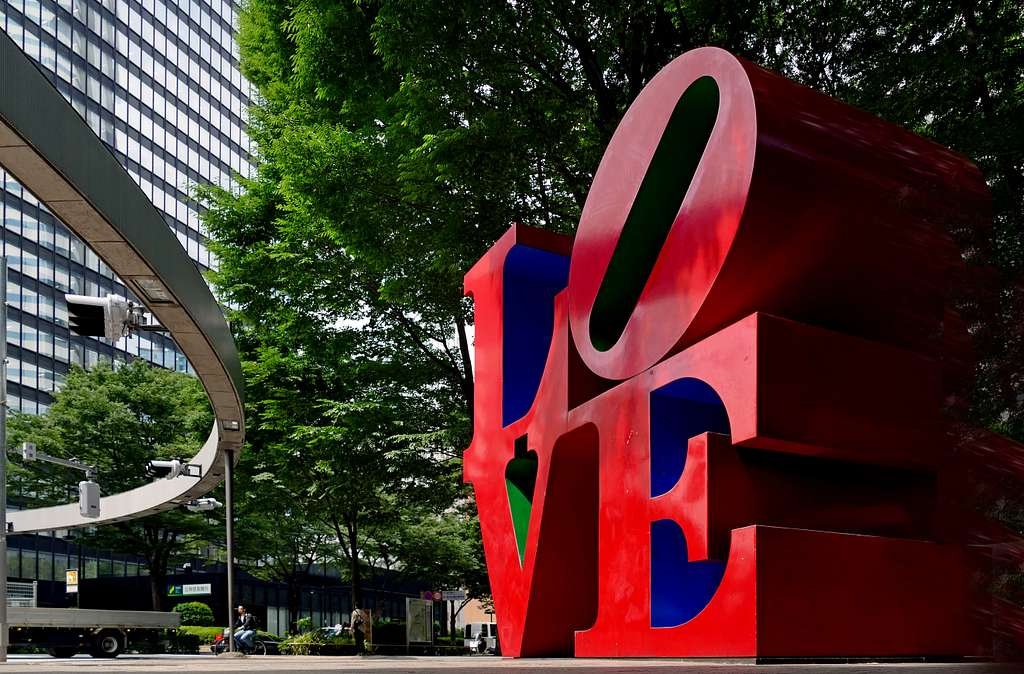
LOVE sculpture, Shinjuku, Japan, 2018
Robert Indiana (born Robert Clark, 1928–2018) was an American painter and sculptor who became one of the most recognized figures of the Pop art movement. His bold use of words, numbers, and graphic forms turned simple language into powerful visual symbols. Born in New Castle, Indiana, he later changed his surname to Indiana to reflect his connection to his home state, a choice that mirrored his deep interest in American identity and vernacular imagery. (Encyclopedia Britannica)
Indiana’s work looks simple at first glance. Up close it is layered: he used everyday signs, colors, typography, and stark shapes to probe optimism, disillusionment, and social meaning. His art is found in major collections worldwide including MoMA in New York, Tate Modern in London, and the San Francisco Museum of Modern Art. (Whitney Museum)
From an LGBTQ+ perspective, Indiana’s legacy also includes how his personal life and relationships shaped his art. He was openly gay in an era when many artists were not public about their sexuality. His most famous work, LOVE, has roots in a romantic relationship (1956-1965) with fellow artist Ellsworth Kelly, a relationship that influenced both his artistic shift into hard-edge forms and his emotional lexicon of words and feelings. (Wikipedia)
Key Works and Dates
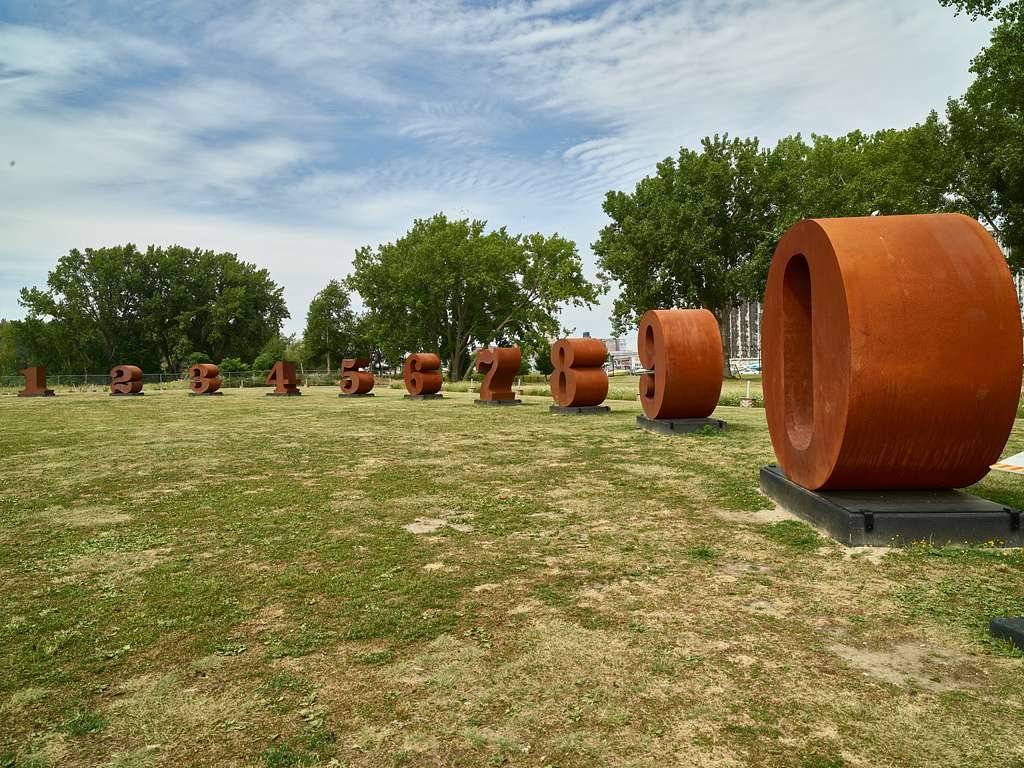
Buffalo, NY Outer Harbor
Work | Year | Medium | Context and significance | Source
Love image | 1964 | Graphic design, painting | First appeared on Christmas cards. Used by MoMA for its 1965 holiday card. Established the LOVE motif that defined Indiana’s public identity. | https://en.wikipedia.org/wiki/Love_(image)
LOVE sculpture (aluminum) | 1966 | Aluminum sculpture | First large-scale sculptural version. Shifted LOVE from flat image to public object. | https://en.wikipedia.org/wiki/Robert_Indiana
LOVE sculpture (Indianapolis) | 1970 | Cor-Ten steel sculpture | Installed at the Indianapolis Museum of Art. Became a permanent civic landmark tied to Indiana’s personal history. | https://en.wikipedia.org/wiki/Love_(Indianapolis)
LOVE U.S. postage stamp | 1973 | Print, postage stamp | Issued by the U.S. Postal Service. Circulated to millions. One of the most reproduced artworks in U.S. history. | https://www.britannica.com/biography/Robert-Indiana
ONE Through ZERO (The Ten Numbers) | 1980–2001 | Painted aluminum sculptures | Ten monumental number sculptures reflecting life stages, time, and mortality. Installed internationally. | https://en.wikipedia.org/wiki/One_Through_Zero_(The_Ten_Numbers)
HOPE series | 2008 | Prints and graphic works | Political adaptation of the LOVE design. Closely associated with U.S. election imagery in 2008. | https://www.marklittler.com/six-things-you-didnt-know-about-robert-indiana/
You can see a timeline of these works at Robert Indiana | Biography, Art & Facts (Britannica) and the Wikipedia entry for One Through Zero. (Encyclopedia Britannica)
LOVE: More Than a Word
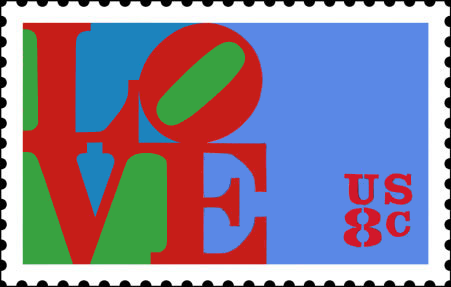
Lovestamp, US, 1973
Indiana’s LOVE image is his most famous work. It began as a personal piece sent to friends and acquaintances in the art world. The Museum of Modern Art in New York featured the image on its annual Christmas card in 1965, helping cement its place in visual culture. (Wikipedia)
The stacked letters (L and O over V and E) with a tilted “O” became so iconic that the U.S. Postal Service adopted the design for a Valentine’s Day stamp in 1973. (Encyclopedia Britannica)
Critics and historians have noted that the emotional depth behind LOVE came from Indianapolis’s complex personal life and especially his early romantic relationship with Ellsworth Kelly. That relationship was intense and often difficult, and some historians argue the work grew from poems and sketches exchanged between the two men. (PinkNews)
While Indiana later expressed ambivalence about the rampant commercial use of LOVE, the work remains a cultural touchpoint in art and in broader conversations about how language and emotion intersect. (The Art Story)
Relationships and LGBTQ+ Context
Indiana lived and worked in Manhattan during the vibrant postwar art scene. His relationship with Ellsworth Kelly in the late 1950s and early 1960s helped shape his artistic direction. Kelly encouraged him to adopt hard-edge painting and geometric forms, which became central to Indiana’s practice. (Wikipedia)
Despite being openly gay in many circles, Indiana did not make his sexuality a public statement in his career. He described himself as “out to some but not to others.” That nuanced visibility reflects the challenges many gay artists faced at a time when public acknowledgment could affect careers. (The Art Newspaper)
The emotional complications of his relationships, including the breakup with Kelly, are part of how LOVE was born. In that light, the piece can be seen as an early, oblique articulation of queer emotional experience that reached millions without explicit declaration. (PinkNews)
Legacy
Indiana continued producing art across six decades, exploring numbers, words, and symbols. His ONE Through ZERO series, for example, treated digits as sculptural forms and meditations on life stages. (Wikipedia)
Exhibitions like Robert Indiana: Beyond LOVE at the Whitney Museum of American Art showed how his work goes beyond mere bright surfaces. The retrospective highlighted themes of identity, societal tension, and emotional complexity. (robertindiana.com)
His art remains both visually accessible and contextually rich. From an LGBTQ+ perspective, recognizing the personal stories behind iconic visuals adds depth to how we view his legacy.