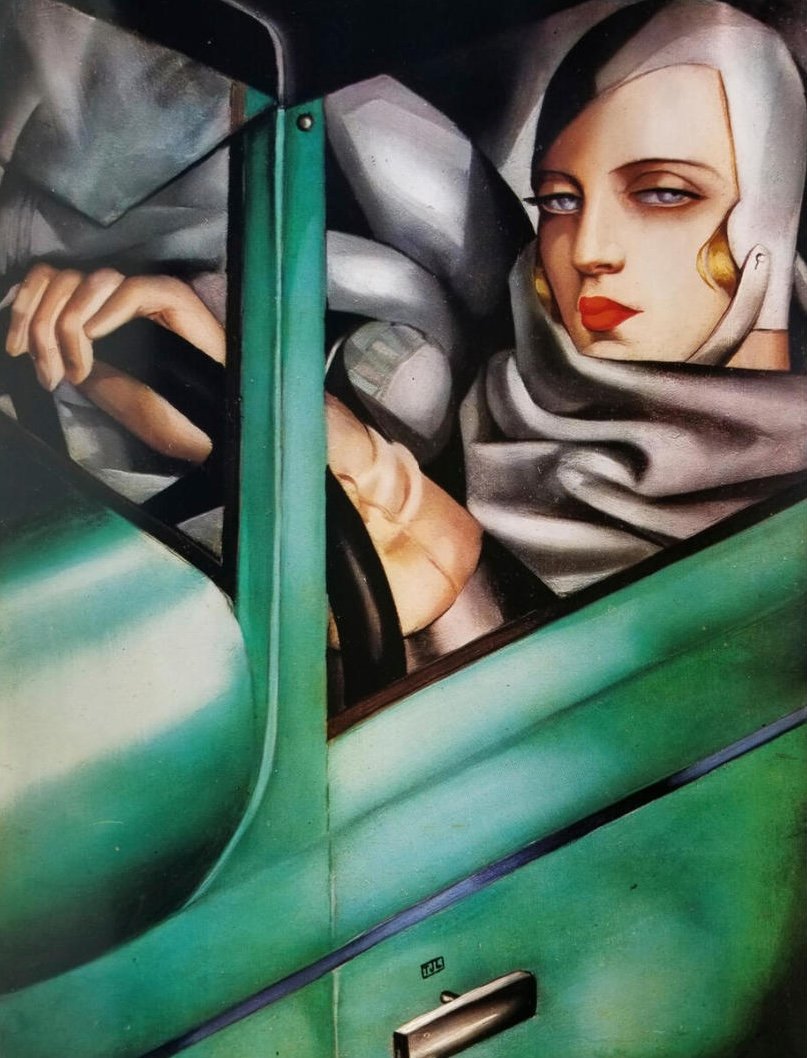
Tamara de Lempicka, Self-Portrait in a Green Bugatti, 1929 – Public Domain via Wikimedia Commons
Tamara de Lempicka’s art is instantly recognizable: sleek, polished, sensual. Born in Warsaw in 1898 and later a fixture of Parisian society, she painted women with sculpted faces, cool gazes, and unapologetic confidence. Her work embodied the Art Deco age: luxury, control, and modern sexuality.
But beneath the glamour lay a radical challenge. Lempicka’s world was queer, cosmopolitan, and defiant. She painted women as objects of admiration and desire, often blurring the boundaries between model and lover. For LGBTQ+ viewers, her portraits still resonate as images of self-possession and coded intimacy in a time when same-sex love was rarely shown publicly.
Queer Identity in a Modern Frame
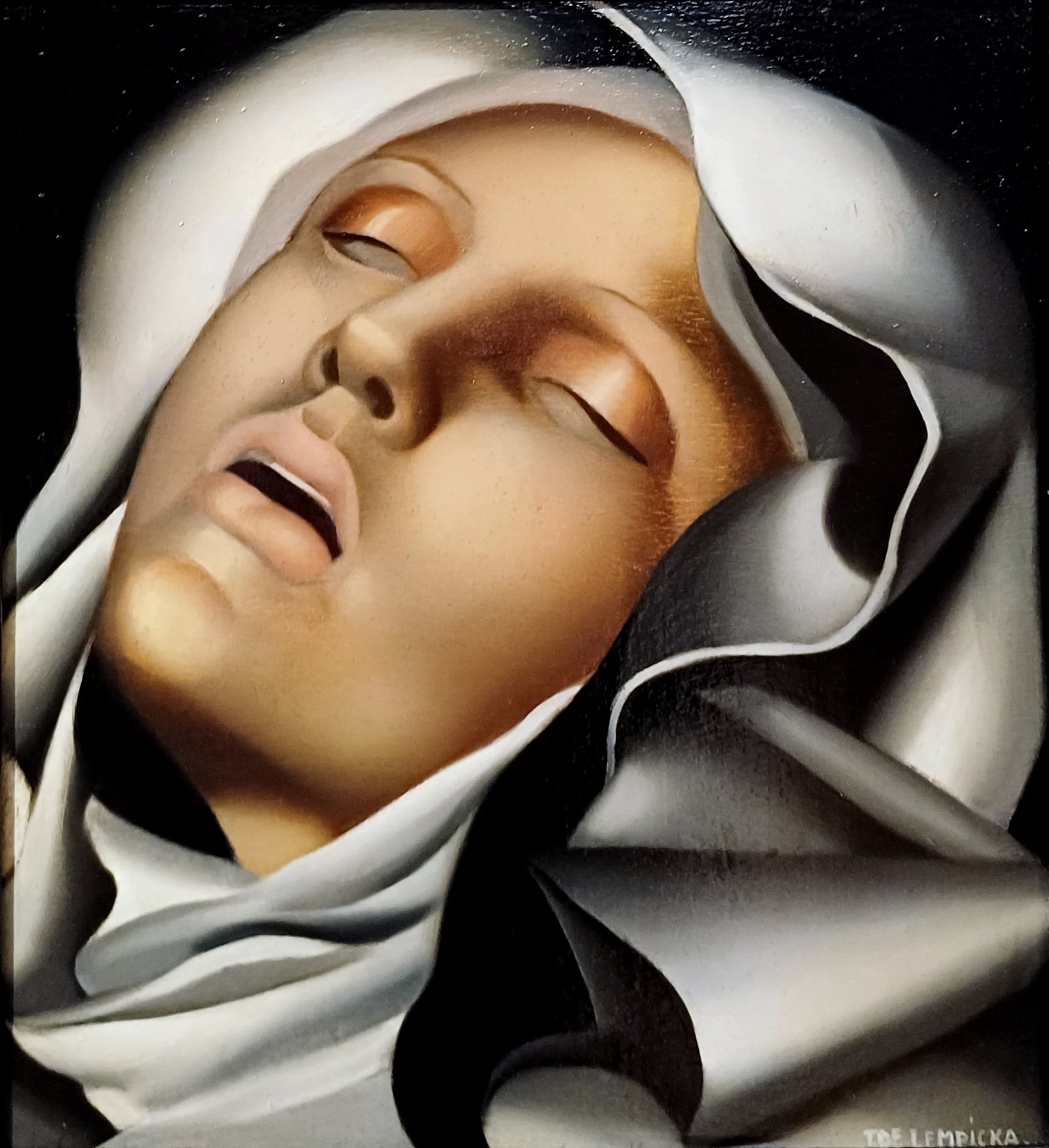
‘Saint Teresa of Ávila’ (1930) by Tamara de Lempick – Museo Soumaya – Mexico
In 1920s Paris, Lempicka moved in circles that included writers, dancers, and openly queer artists. Her affairs with women were widely rumored, and her art reflected a fascination with female form that went beyond aesthetic admiration. She used visual language, angles, light, and composition, to express sensuality between women in a society obsessed with appearances.
Her 1930 painting Two Friends portrays two women locked in a private embrace, one of the most openly queer works of her era. Unlike many contemporaries who disguised such themes, Lempicka’s approach was overt yet elegant, stylized enough to pass through polite salons, but unmistakable to those who understood.
Famous Works
| Title | Year | Medium | Notes |
|---|---|---|---|
| Self-Portrait (Tamara in a Green Bugatti) | 1929 | Oil on canvas | Iconic Art Deco image of female independence and queer glamour |
| The Beautiful Rafaela | 1927 | Oil on canvas | Inspired by her female muse and lover |
| Two Friends | 1930 | Oil on canvas | Intimate portrayal of women’s affection; coded lesbian imagery |
| Portrait of Ira P. | 1930 | Oil on canvas | Elegant, sensual, blending eroticism and modern design |
| Adam and Eve | 1932 | Oil on canvas | Queer reinterpretation of biblical myth through sculpted forms |
Her Relevance to the LGBTQ+ Community
Lempicka remains a queer icon because she painted women who looked in control of their own stories. Her art was a mirror for queer desire, hidden in plain sight.
- She lived openly bisexual within elite social circles.
- Her female subjects radiate autonomy rather than submission.
- She broke visual conventions, portraying women as power figures rather than muses.
- Her confident eroticism foreshadowed modern queer visibility.
Her unapologetic self-expression continues to inspire LGBTQ+ artists, particularly women who navigate the same tension between visibility and societal judgment.
The Beautiful Rafaela, 1927 – Public Domain via Wikimedia Commons
Two Friends, 1930 – Public Domain via Wikimedia Commons
Adam and Eve, 1932 – Public Domain via Wikimedia Commons
Tamara de Lempicka’s work stands where art, gender, and defiance meet. Her women, polished and untouchable, still look back at us with a knowing stare. They remind queer audiences that beauty can be power, and desire can be art.