
Gefühl der Abhängigkeit / Feeling of Dependency, 1894
Sascha Schneider (1870–1927) made pictures that look like memory and a dare. His work lives at the intersection of Symbolism, idealized anatomy, and queer desire. If you encounter one of his images you notice two things at once: the bodies are carefully modeled, and the mood is private. (Wikipedia)
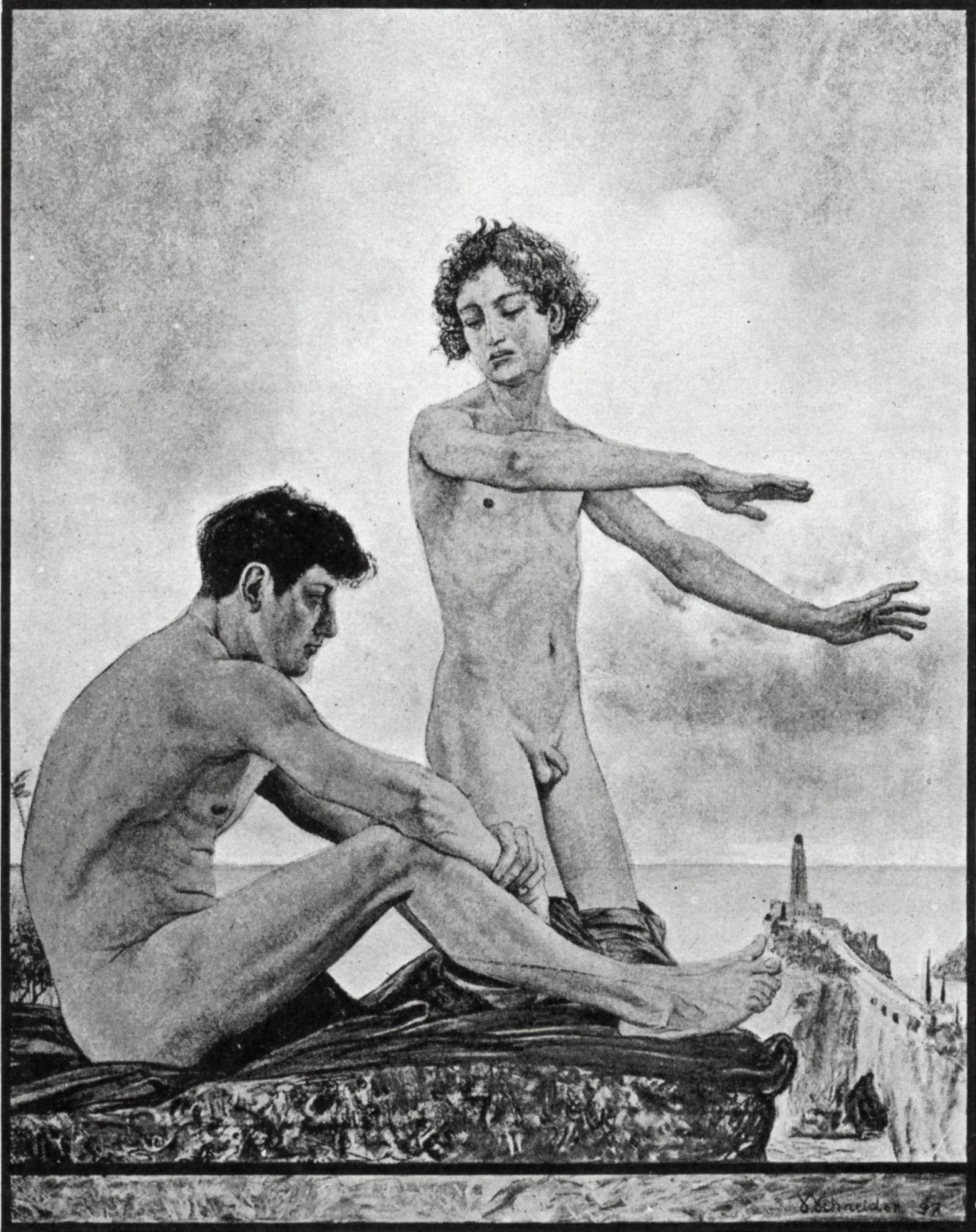
Morgendämmerung, 1897
Born Rudolph Karl Alexander Schneider in Saint Petersburg, he grew up partly in Zürich and trained at the Dresden Academy of Fine Arts. He worked as a painter, sculptor, and book illustrator. Early shows in Dresden led to large allegorical commissions. In the 1900s he became widely known as the illustrator for Karl May, which brought him a broad audience and steady income. His life included travel across Europe, friendships with other artists, and long periods of ill health before his death in 1927. (Wikipedia)
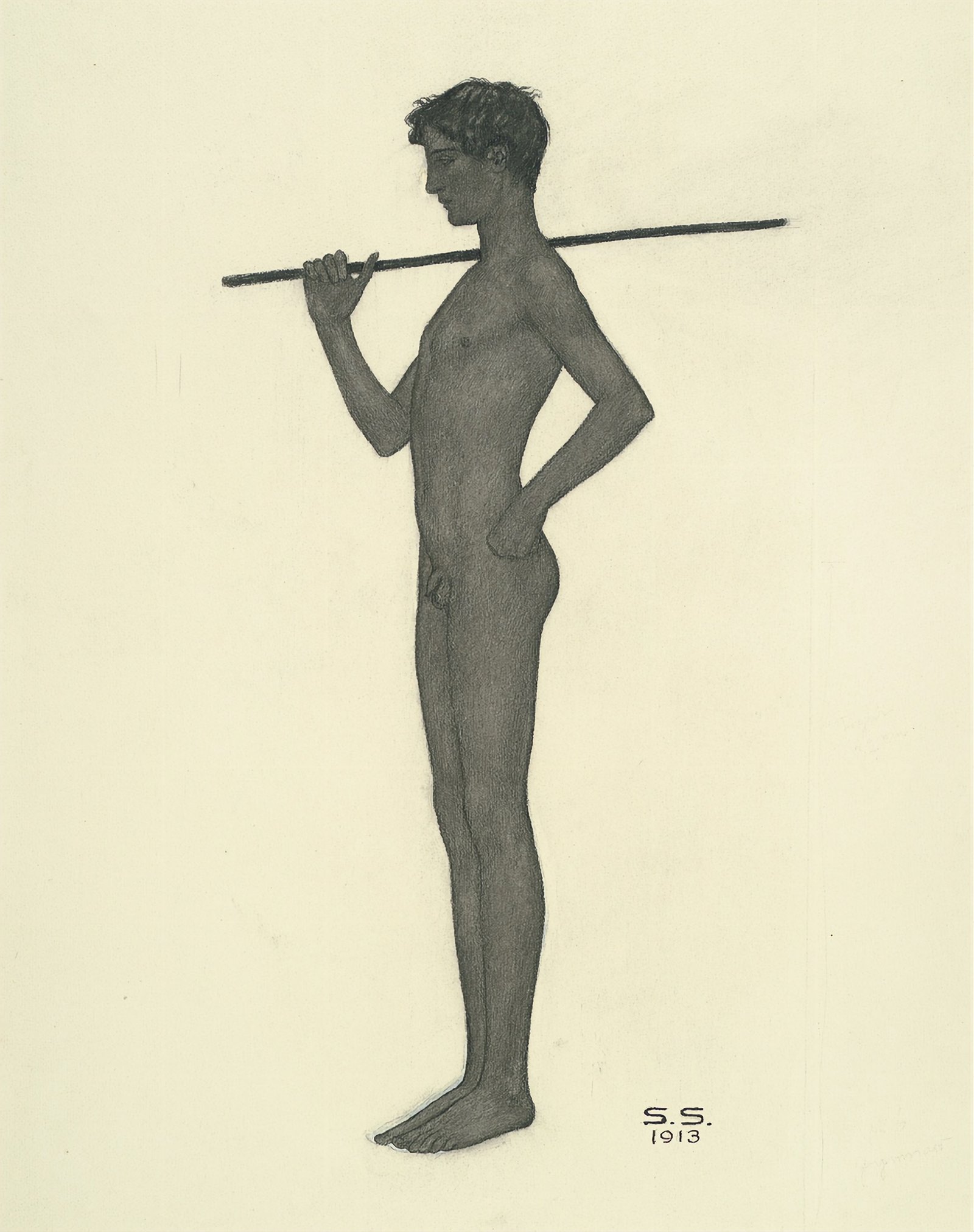
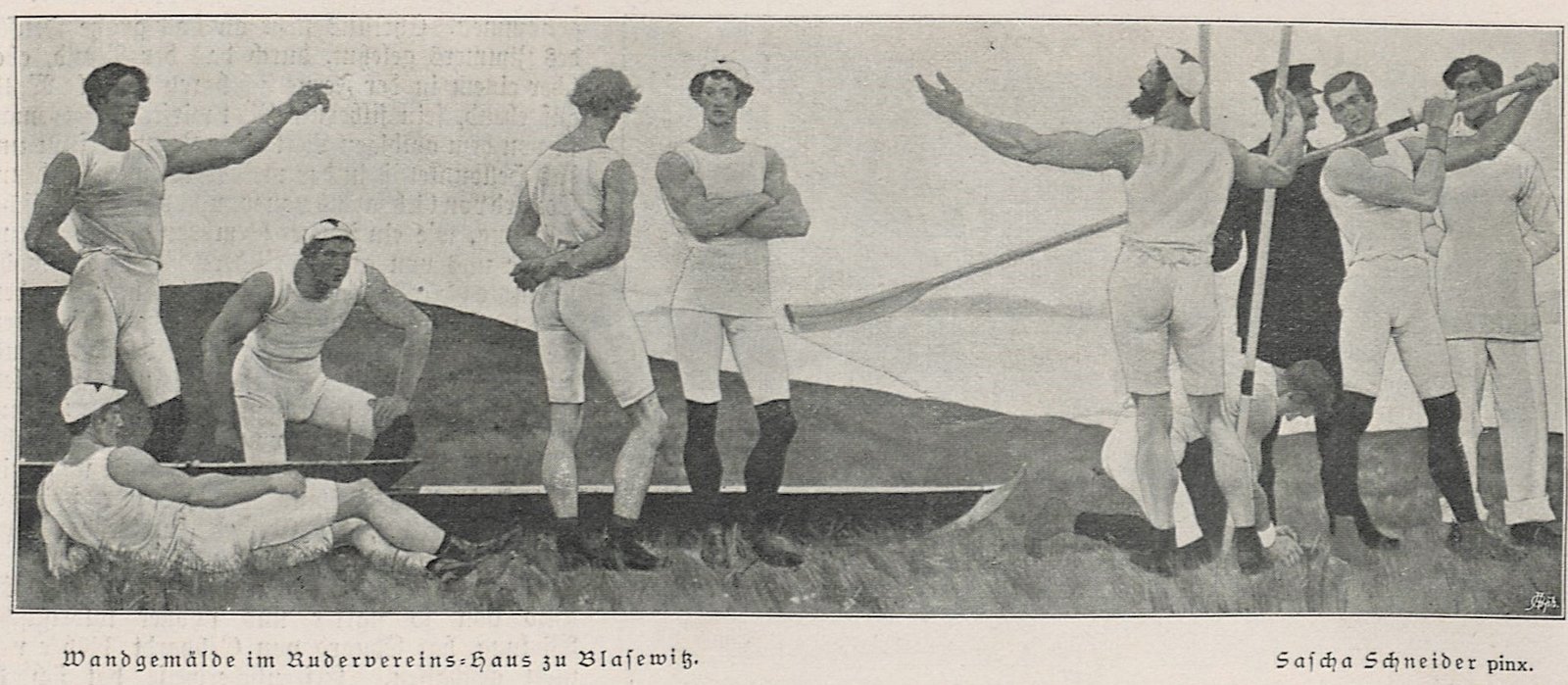
You should see Schneider as both a technical craftsman and a cultural provocateur. He mastered draftsmanship. He used classical poses and tight composition. Yet his subject was often the male body in states of intensity. These were not purely anatomical studies. They carried erotic charge and psychological strain. He staged bodies like actors. He photographed poses then painted them, producing a precise, staged look. (www.wikiart.org)
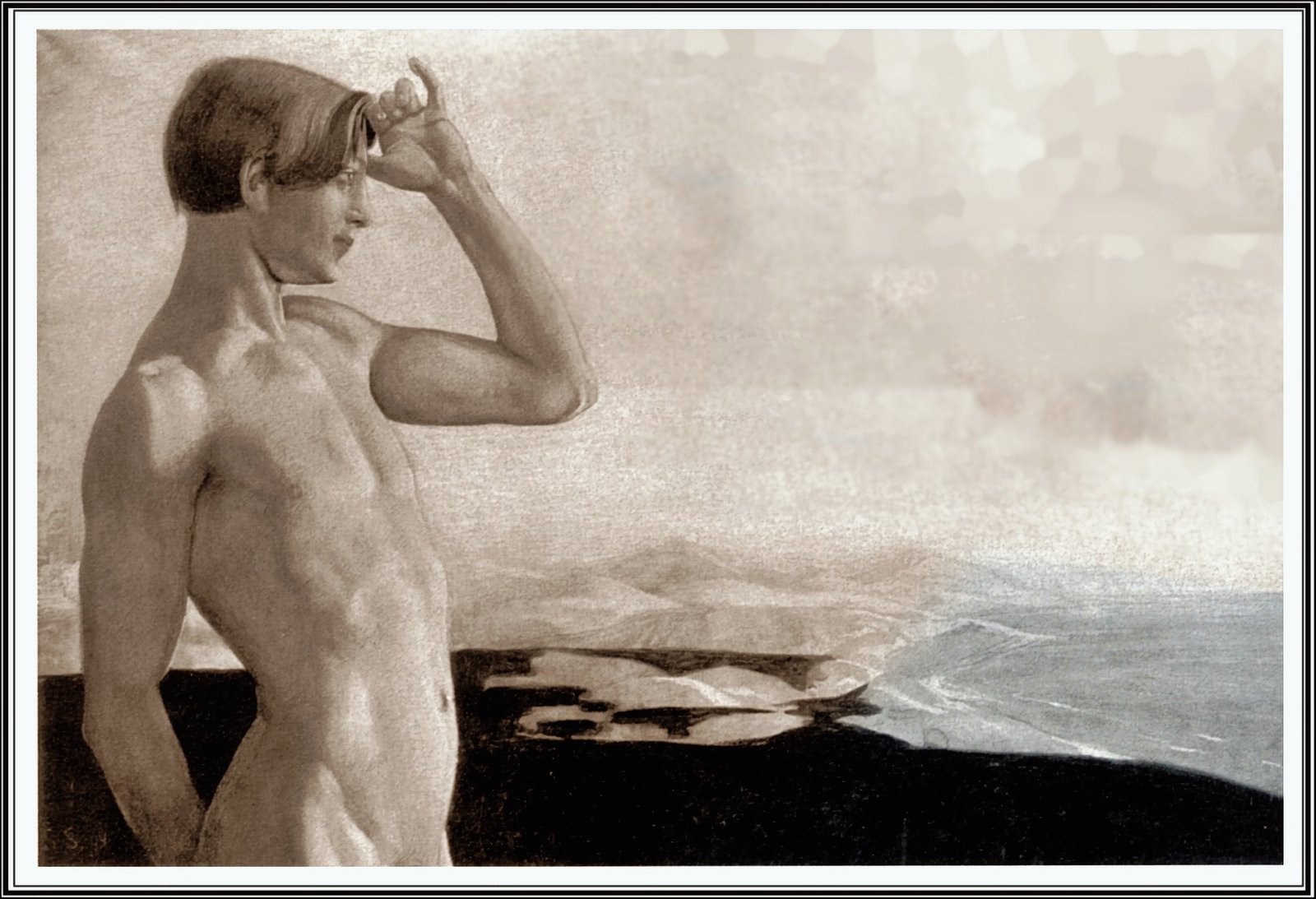
Erwachten Erkenntnis, 1904
Schneider’s Private Sexuality and Why It Matters
Schneider lived openly enough for his time, but his sexual identity also placed him under threat. He lived with the painter Hellmuth Jahn while he held a professorship in Weimar. Jahn later threatened to expose Schneider’s homosexuality under the German § 175 law, which criminalised same-sex male relations. As a result Schneider fled to Italy where homosexuality was not criminalised at that time. (Wikipedia)
His contributions to the journal Der Eigene (the first gay journal in the world) confirm he identified with or at least aligned himself publicly with gay culture. (Wikipedia)
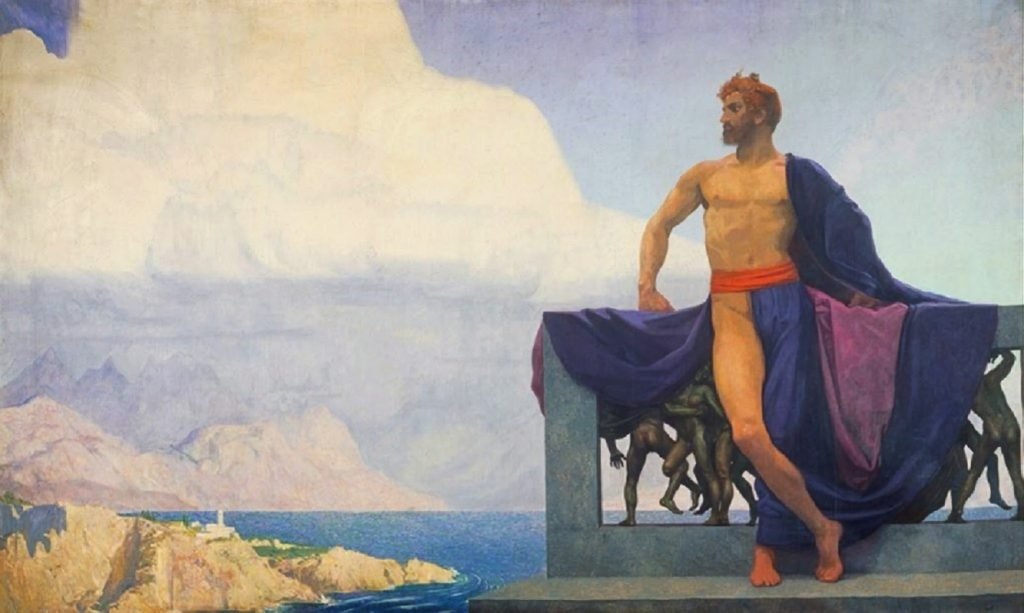
Sascha Schneider – Hohes Sinnen / Fürst auf der Terrasse (1903)
In his art the male body is not merely an ideal form but a site of erotic tension, desire and coded visibility. Several scholars argue that his imagery and practice encoded a queer visual language at a time when open representation was dangerous. (Toby Leon)
For LGBTQ+ people today, Schneider’s life offers:
- A historical example of gay (or queer) self-presentation in a hostile era.
- Visual forms of desire and identity prior to modern gay liberation.
- A legacy of visibility: his work can be read as early queer art rather than simply “male nude.”
- A source for understanding how art and sexuality intersect in cultural history.
Major Works
| Year | Title | Medium / Notes | Link for Viewing |
|---|---|---|---|
| 1894 | The Anarchist | Oil on canvas | https://www.wikiart.org/en/sascha-schneider/the-anarchist-1894 (johncoulthart.com) |
| c.1897 | A Vision (Eine Vision) | Oil on canvas | https://www.johncoulthart.com/feuilleton/2008/02/03/the-art-of-sascha-schneider-1870-1927/ (johncoulthart.com) |
| c.1900 | The Feeling of Dependence (Das Gefühl der Abhängigkeit) | Illustration/wood engraving / painting | https://www.artrenewal.org/artists/sascha-schneider/8079 (Henry Miller Fine Art) |
| 1902 | For Truth (Um die Wahrheit) | Large-scale painting (now lost/archival) | John Coulthart essay above (johncoulthart.com) |
| 1904 | Hypnose (Hypnosis) | Print/engraving | https://commons.wikimedia.org/wiki/File:Hypnose_(Schneider).jpg (Wikipedia) |
| 1912 | Mein Gestalten und Bilden (Autobiography) | Book | https://en.wikipedia.org/wiki/Sascha_Schneider#Works (Wikipedia) |
| Various | To a Soul (Zur Seele) | Print / painting | https://commons.wikimedia.org/wiki/File:Sascha_Schneider_-_To_A_Soul.jpg (Wikipedia) |
The homoerotic nature of Schneider’s images is not a modern projection. He painted the male nude as a central subject at a time when public depictions of male beauty could be read as moral, athletic, or erotic. Schneider leaned toward erotic meaning. He often depicted close male pairs, clasping hands, or locked gazes. Museums and scholars have treated this aspect candidly. Leslie-Lohman Museum of Art devoted an exhibition to Schneider’s homoerotic work, showing how his images mirrored debates about masculinity, health, and sexuality around 1900. For queer viewers, Schneider offers both representation and a genealogy. (leslielohman.org)
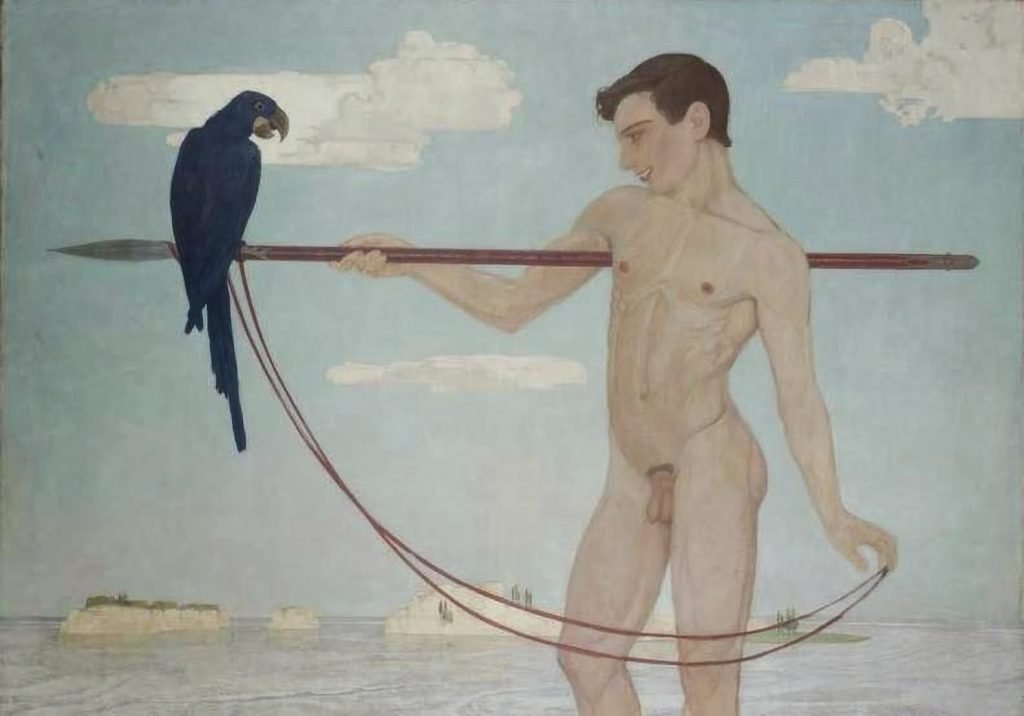
Why does this matter now? First, visibility. Schneider created a visual language for male desire before visible queer culture existed in public life. Seeing his work can feel like finding an older conversation in which desire was already being shaped. Second, complexity. His images mix adoration with anxiety. The idealized body often appears trapped or strained. That complexity lets queer viewers read desire with caution and history. Third, recovery. Much of Schneider’s reputation waned after World War II. Recent exhibitions and scholarship have brought his work back into conversations about queer modernism. That recovery helps you place LGBTQ+ visual culture in a longer story. (johncoulthart.com)
If you want depth, start with the Leslie-Lohman exhibition notes and the Wikimedia Commons file collection. The Leslie-Lohman text situates Schneider within queer art history. Wikimedia hosts many of his public-domain images you can inspect closely. John Coulthart’s essay collects images and historical notes that help you place large projects like For Truth in context. (leslielohman.org)
A final note on interpretation. Schneider’s images can feel both powerful and troubling. The bodies often appear ideal. They also show strain and constraint. That tension gives you room to read the works as expressions of desire, as critiques of the era’s ideals, or as ambiguous blends of both. For contemporary LGBTQ+ viewers, that ambiguity is useful. It lets you see queer longing in historical form and trace how representation changes across time and social boundary. (A R T L▼R K)
Sources
- Wikipedia (English) – “Sascha Schneider” (Wikipedia)
- Wikipedia (German) – “Sascha Schneider” (Wikipedia)
- Artist Focus: Sascha Schneider, Henry Miller Fine Art (Henry Miller Fine Art)
- Exhibition page: Schwules Museum – “Ich gehe meine eigenen Wege… Sascha Schneider – Kunst und Homoerotik um 1900” (Schwules Museum)
- Queer Art PDF by Judith Schuyf on Schneider (Judith Schuyf)
- Toby Leon article “Muscle and Myth: Sascha Schneider’s Gay Symbolism” (Toby Leon)
- John Coulthart essay – “The art of Sascha Schneider, 1870–1927” (johncoulthart.com)
- Article “Artist Spotlight: Sascha Schneider” in Advocate (Advocate.com)
- Wikipedia – “Der Eigene” (journal) where Schneider contributed (Wikipedia)
- Radebeul city-archive page on Schneider (radebeul.de)
- Ikonoteka article on queer print theory and Schneider’s homoeroticism (Biblioteka Nauki)


