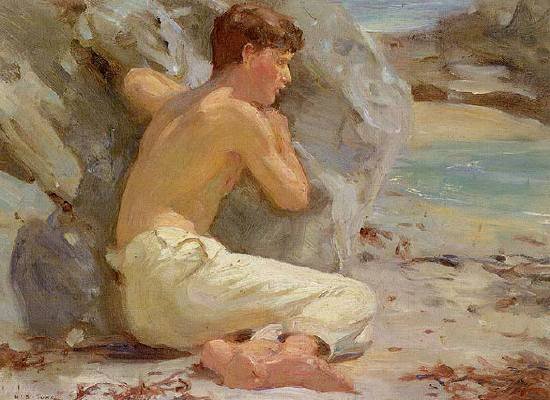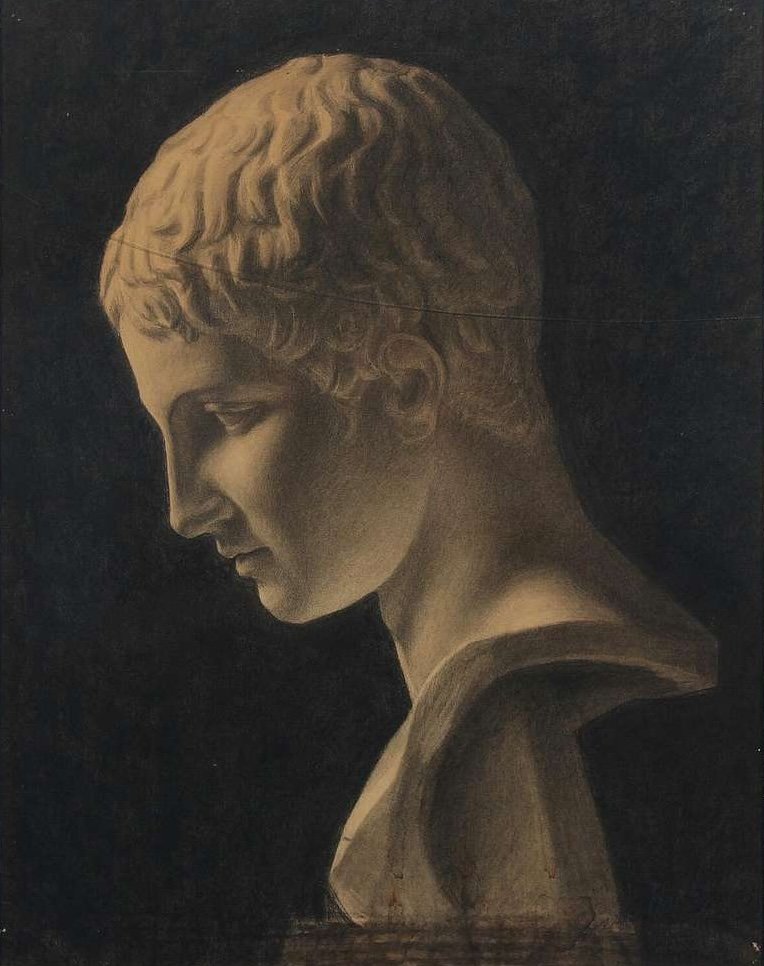
Greek youth, 1903
Cross reference: https://gayriot.art/gerda-wegener-artist-queer-identity-love/
Lili Elbe was a Danish painter and one of the first people known to undergo gender-affirming surgery. Born Einar Wegener in Vejle, Denmark, in 1882, she trained at the Royal Danish Academy of Fine Arts and worked as a landscape and interior painter before transitioning to live as a woman in the 1920s. Her life occupies a critical place in early LGBTQ+ history, where personal visibility carried real physical risk.
https://www.britannica.com/biography/Lili-Elbe
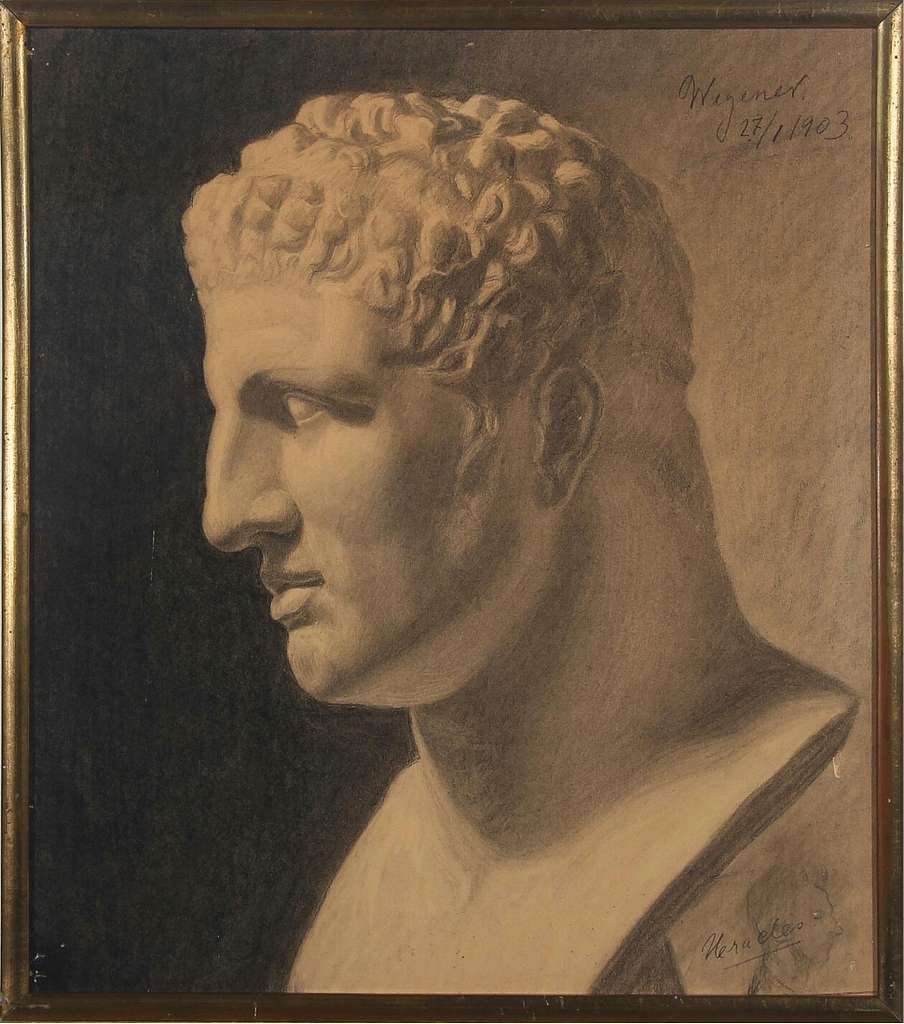
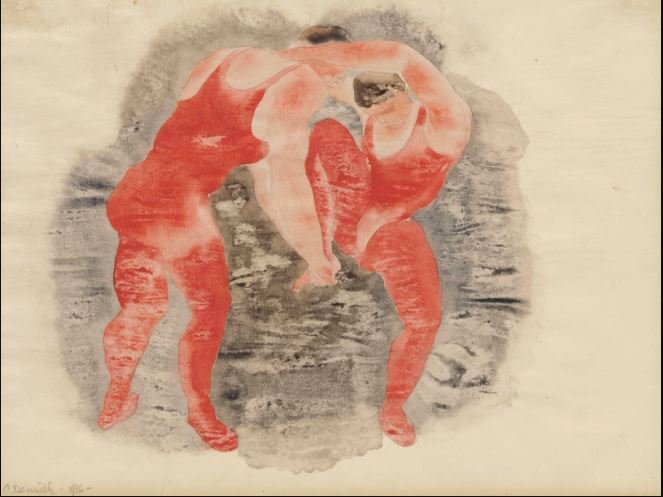
Herkales, 1903
Lili’s art career began under the name Einar Wegener. She married fellow artist Gerda Gottlieb in 1904, and they moved to Paris in 1912. In Paris, Wegener modeled for Gerda’s illustrations and began appearing socially as Lili. This public presentation matters from an LGBTQ+ viewpoint because it predates organized transgender advocacy by decades. Lili lived openly as a woman at a time when language, legal protection, and medical pathways barely existed.
https://www.britannica.com/biography/Lili-Elbe
In 1930, Lili sought medical transition in Germany. Physicians connected to Magnus Hirschfeld’s Institute for Sexual Science evaluated her before a series of experimental operations. These procedures were medically dangerous and ethically uncertain. From an LGBTQ+ perspective, her choice highlights how trans people historically navigated extreme risk to align body and identity. Her death in 1931 underscores the cost of early medical experimentation driven by necessity rather than safety.
https://en.wikipedia.org/wiki/Lili_Elbe
Her life inspired the memoir Man into Woman and later The Danish Girl. These works introduced transgender history to a mass audience. They also simplified events and sidelined Gerda Wegener’s role. LGBTQ+ scholars note this tension. Visibility expanded, but accuracy suffered. Lili remains important because she became a reference point for trans existence long before modern movements formed.
https://www.lilielbe.org/narrative/publicationHistory.html
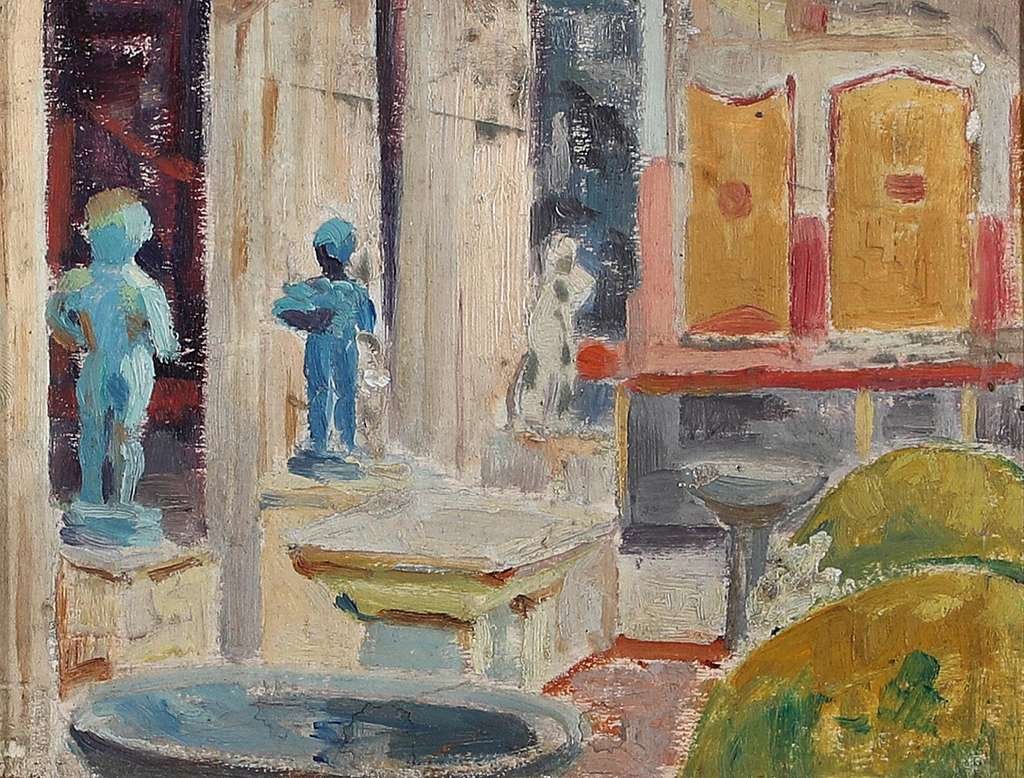
Study with figures, year unknown
Major Works by Einar Wegener / Lili Elbe
| Title | Year | Medium | LGBTQ+ Significance | Style / Exhibition Notes |
|---|---|---|---|---|
| Coastal View from France | 1918 | Oil | Created during a period of private gender exploration | Mediterranean landscape; shows mastery of light and color; reflects early artistic confidence |
| Trianon | 1920 | Oil | Part of a body of work later reassessed through her gender history | Depicts Versailles-area scenery; part of series emphasizing formal gardens and classical composition |
| Parti Fra Capri | 1921 | Oil | Painted before transition; shows professional standing prior to living openly as Lili | Landscape listed in catalogs; demonstrates plein air technique and atmospheric sensitivity |
| View from the Garden of Versailles | 1922 | Oil | Represents access to European art circles rarely open to gender-nonconforming people | Formal garden scene; reflects refined academic style and international exposure |
| Portrait de femme | 1923 | Oil | Rare figurative work; interpreted by some scholars as early reflection of self-identification | Shows nuanced understanding of human form and identity; possibly autobiographical subtext |
For additional works and images, see Wikimedia Commons, which catalogs paintings signed as Einar Wegener.
https://commons.wikimedia.org/wiki/Category:Paintings_by_Lili_Elbe
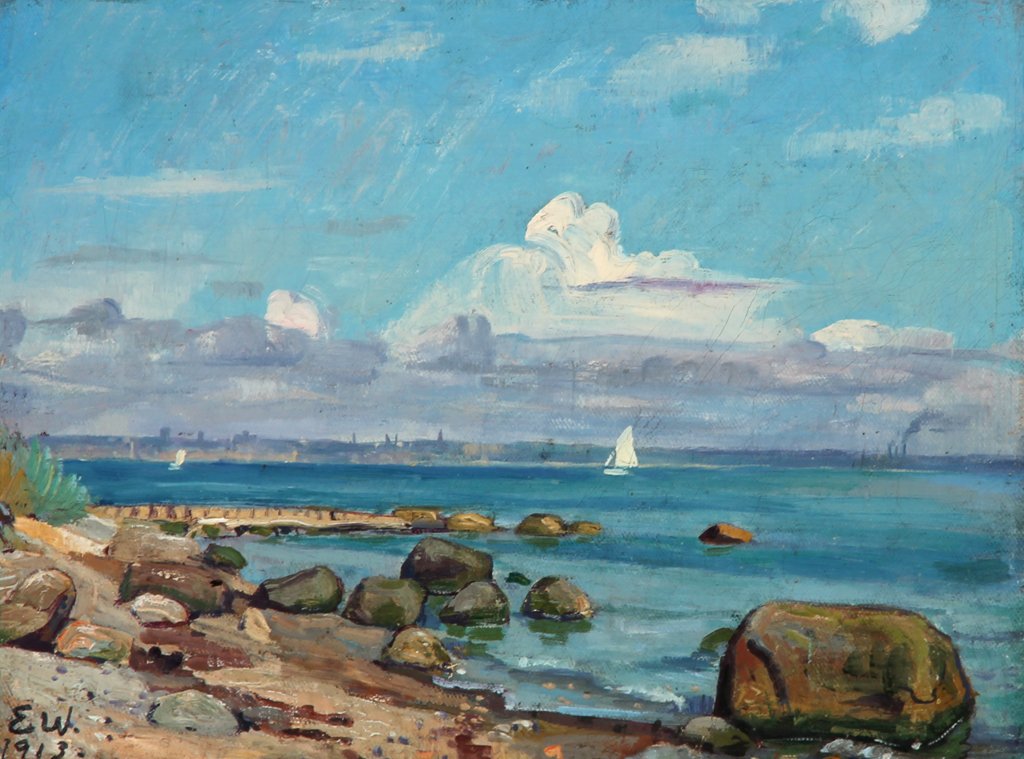
Fjord, 1913
Why Lili Elbe Matters in LGBTQ+ History
Lili Elbe matters because she existed publicly when silence was the safer option. She documented her experience at a time when trans lives were treated as medical curiosities or moral threats. Her case influenced early sexology, informed later medical ethics debates, and provided one of the first widely read trans autobiographical narratives. She stands as evidence that transgender lives did not begin with modern terminology or activism. They were already present, already visible, and already demanding recognition.
Further Reading
- Wikipedia overview of her life and surgeries
https://en.wikipedia.org/wiki/Lili_Elbe - Encyclopaedia Britannica biography
https://www.britannica.com/biography/Lili-Elbe - Lili Elbe Digital Archive on publications and reception
https://www.lilielbe.org/narrative/publicationHistory.html
Lili Elbe’s importance lies less in myth and more in record. She lived openly. She documented her life. She forced medicine, art, and society to confront gender variance long before they were prepared to do so.