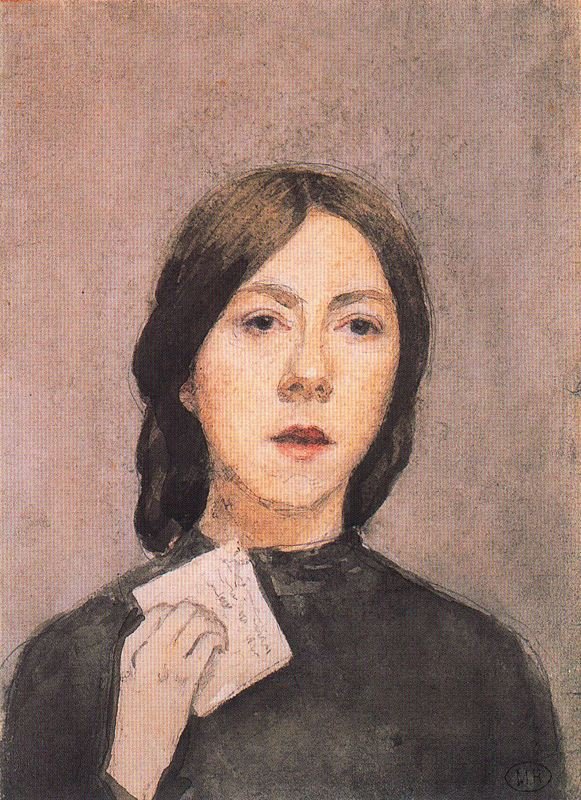
Self Portrait, 1905-1906
Gwendolen Mary “Gwen” John (1876–1939) was a Welsh painter whose work quietly reshaped modern portraiture and interior scenes. She spent most of her career in France, where her cool, introspective style stood apart from more dramatic contemporaries. She mattered as an artist in her own right and from an LGBTQ+ viewpoint because her emotional life and relationships crossed gender lines in a period before modern identity labels. Her story shows how same-sex desire, artistic ambition, and personal solitude intersected in early 20th-century Europe.
John trained at the Slade School of Fine Art in London, one of the few places women could study seriously at the time. She continued her education in Paris under Whistler’s influence and settled there permanently in 1904. Her paintings are often small, muted, and deeply observant. They focus on solitary female figures, hushed interiors, still lifes, and subtle gesture more than grand narrative or public spectacle.
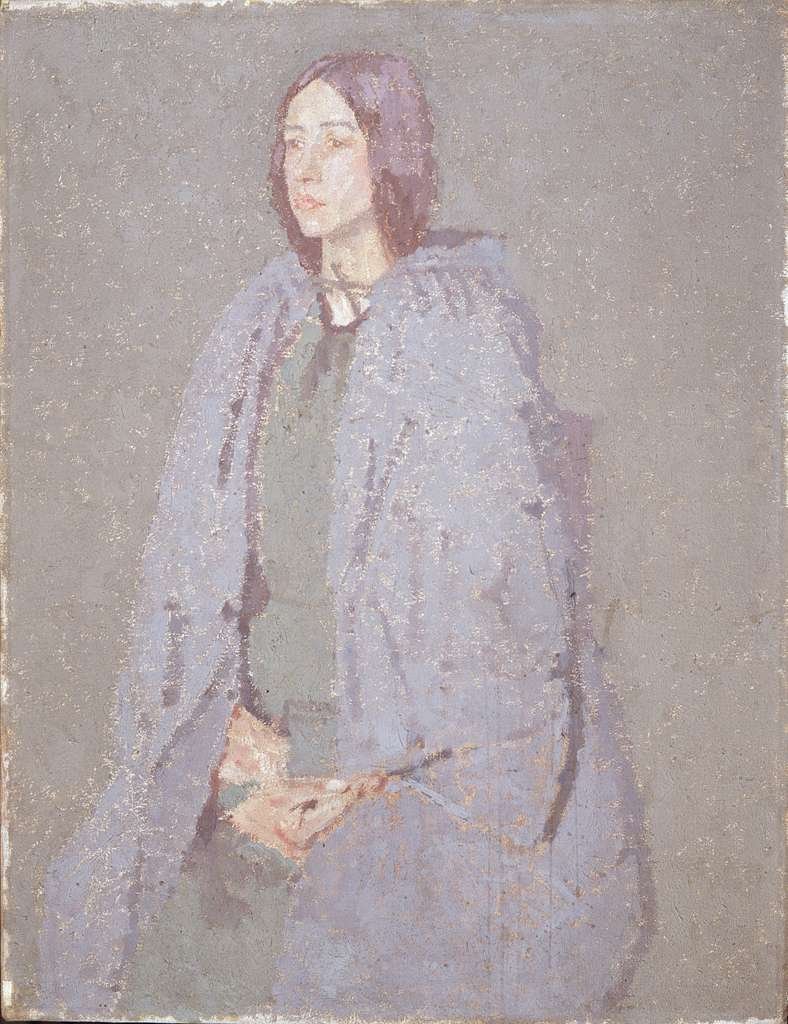
Woman with Cloak, 1926
From an LGBTQ+ perspective, John’s life was marked by attraction and attachment to people of both sexes. As a student she formed intense feelings for an unnamed woman. She later became the lover and model of sculptor Auguste Rodin. Afterward she had several close and emotionally passionate relationships with women, including a long attachment to her neighbour Véra Oumançoff. Her letters and notebooks record feelings that go beyond simple friendship and reflect the emotional complexity of her affections.
She moved fluidly between relationships and emotional worlds at a time when women’s sexuality was tightly policed. She did not use modern sexual identity labels, but her life complicates simple historical narratives that ignore same-sex desire in earlier eras. Her relationships with women were neither peripheral nor accidental; they shaped her emotional world, her writing, and possibly her artistic focus on introspective figures and interior calm.
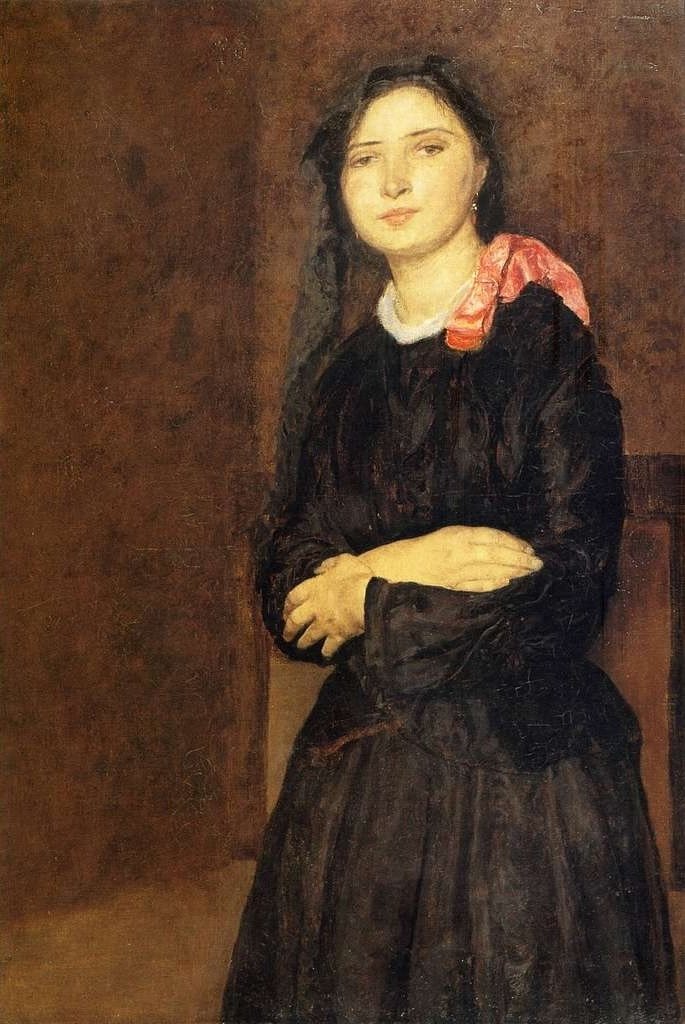
Dorelia in a Black Dress, 1903
Artistically, John’s work is important for its subdued palette, psychological depth, and focus on private experience over public spectacle. Her focus on solitary women became the essence of her work. She painted women reading, thinking, or simply existing in space with a combination of restraint and empathy. Museums now recognize her contribution with major exhibitions and growing collections. A comprehensive retrospective Gwen John: Strange Beauties opened at the National Museum Cardiff in 2026, gathering more than 200 works including paintings, drawings, and letters from across public collections.
Her work matters to queer history not because it depicts explicit LGBTQ+ themes, but because her artistic life and emotional world reflect forms of intimacy that resist easy categorisation. She helps broaden how we think about desire, solitude, and identity in historical context.
Here is a table of some notable works, their dates, and where you can find them online:
| Title | Approx Date | Location / Museum | Link |
|---|---|---|---|
| Self-Portrait | ca. 1907–1909 | National Portrait Gallery, London | https://www.npg.org.uk/collections/search/person/mp02438/gwendolen-mary-gwen-john |
| Girl with a Cat | 1918–1922 | Metropolitan Museum of Art, New York | https://en.wikipedia.org/wiki/Girl_with_a_Cat |
| Vase of Flowers | late 1910s | National Library of Wales | https://en.wikipedia.org/wiki/Vase_of_Flowers |
| The Convalescent | c. 1915–1925 | National Gallery of Art (USA) | https://www.nga.gov/artists/6351-gwen-john/artworks.html |
| Rue Terre Neuve, Meudon | late 1910s–early 1920s | National Gallery of Art (USA) | https://www.nga.gov/artists/6351-gwen-john/artworks.html |
| Cat with a White Front | 1910–1915 | National Gallery of Art (USA) | https://www.nga.gov/artists/6351-gwen-john/artworks.html |
| Women and Nuns Seated in Church | 1925–1929 | National Gallery of Art (USA) | https://www.nga.gov/artists/6351-gwen-john/artworks.html |
Gwen John’s art rewards close looking and quiet thought. Her life and relationships show how gender and desire have always been complex, even when language and culture lacked the categories we use today.