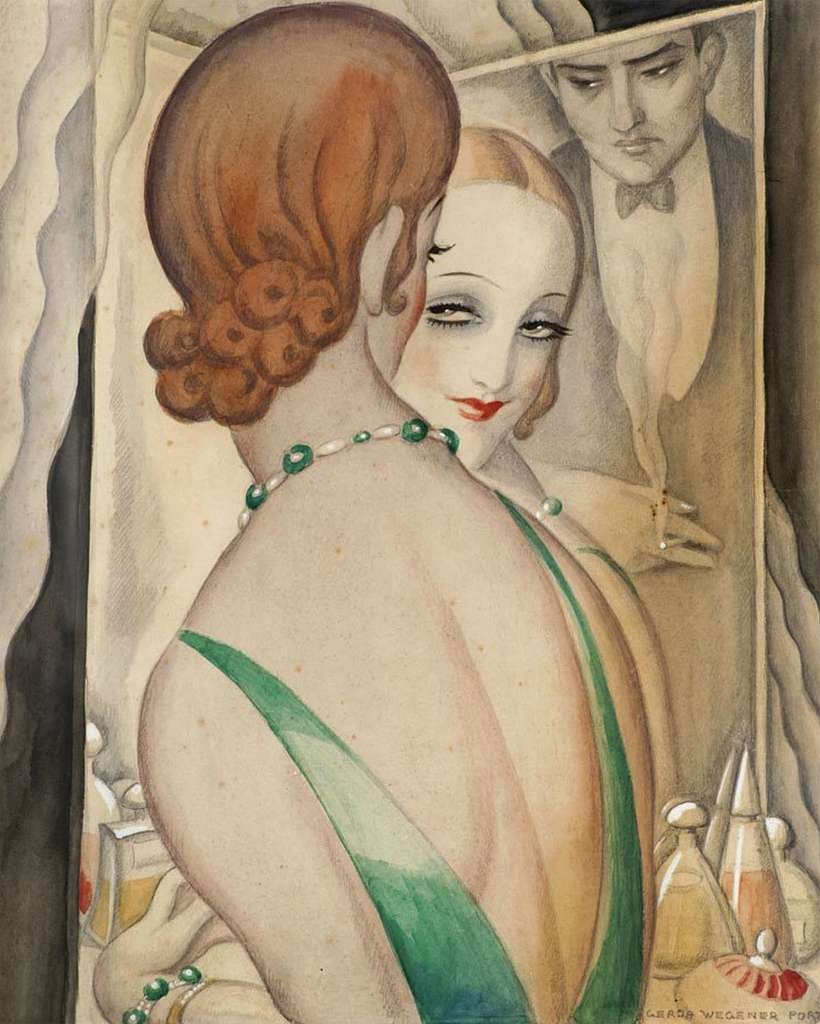
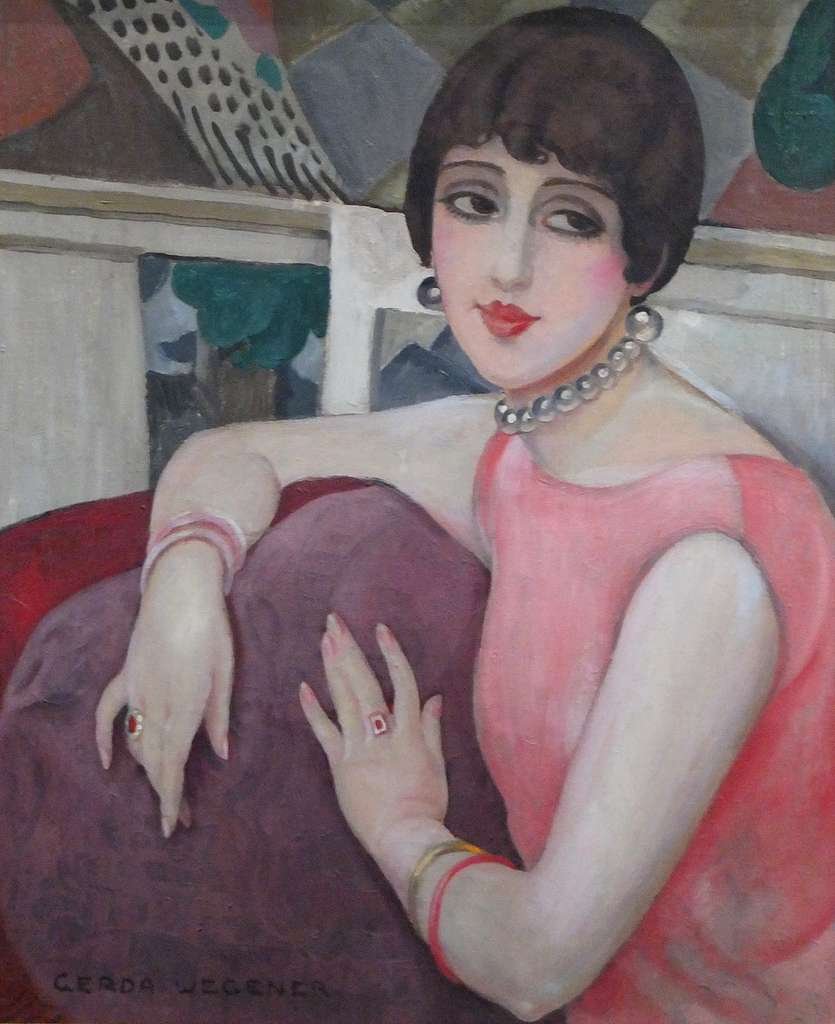
At the mirror (estimated 1931-1936)
Cross reference: https://gayriot.art/lili-elbe-art-transition-and-lasting-influence/
Gerda Wegener (born Gerda Marie Fredrikke Gottlieb, 15 March 1885 – 28 July 1940) was a Danish painter and illustrator whose work reshaped early twentieth-century art by placing women, desire, and gender fluidity at the center of her vision. She trained in Copenhagen, later moved with her partner to Paris in 1912, and became known for her elegant fashion illustrations, erotic portrayals of women, and portraits that challenged rigid gender images of her time. Her art crossed boundaries between commercial illustration and fine painting. (Wikipedia)
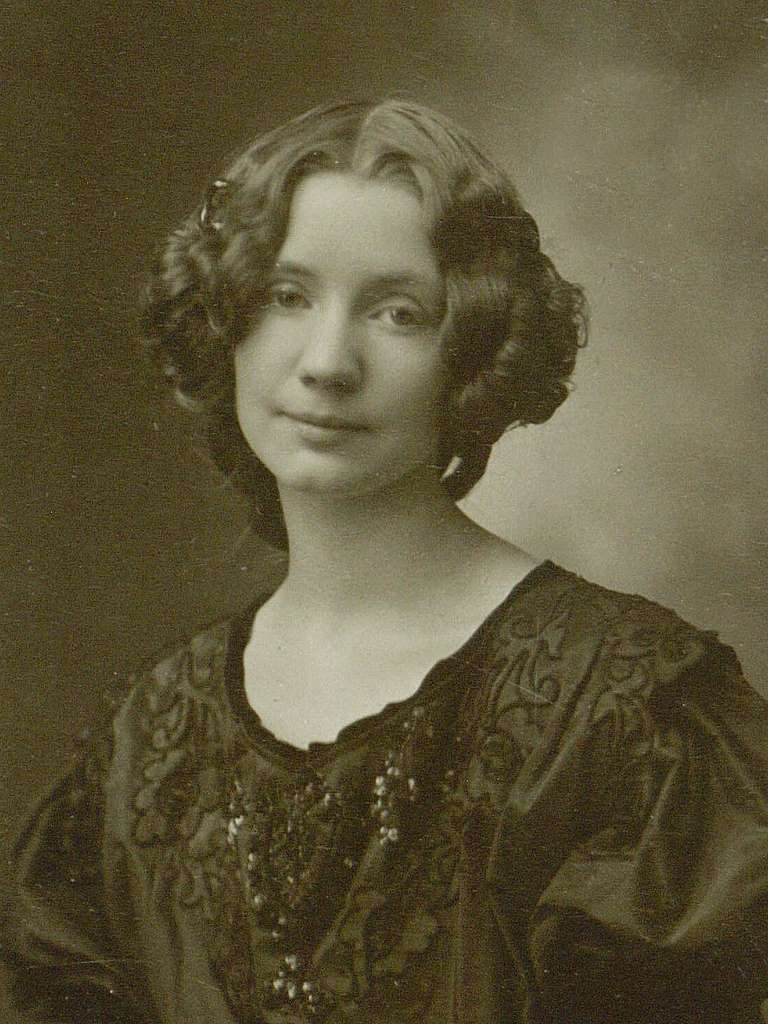
Gerda Wegener, wedding day, 1904
Wegener’s work was controversial in her native Denmark, where critics sometimes dismissed it as risqué or labeled it “lesbian erotica” because of its frank depiction of women and same-sex desire. In Paris, however, she found a more receptive audience for her stylized depictions of confident, modern women in both social and solitary settings. (Girl Museum)
Relationship with Lili Elbe (1882–1931)
Lili Elbe (Einar Wegener), portrait by Gerda Wegener, 1922
Gerda met fellow artist Lili Elbe (born Einar Wegener) while both studied at the Royal Danish Academy of Fine Arts. They married in 1904. Initially, Lili painted landscapes while Wegener worked as an illustrator. An early pivotal moment occurred when a female model failed to appear, and Lili agreed to wear women’s clothing to model for Gerda. This experience was profoundly affirming for Lili and opened a lifelong exploration of gender identity. (Encyclopedia Britannica)
Over time Lili adopted her female identity more fully. In Paris the couple often presented together, sometimes telling acquaintances that Lili was Gerda’s cousin to avoid scrutiny. Their close personal and creative partnership made Lili the artist’s favorite model. Research suggests their bond was deeply loving; however, contemporaneous legal frameworks limited how openly they could express romantic affection without jeopardizing Lili’s legal recognition as female. (DailyArt Magazine)
Lili underwent several pioneering gender-affirming surgeries in Germany in 1930. At that point Danish law required the annulment of their marriage because she was legally recognized as a woman. Lili Elbe died in 1931 from surgical complications. Her autobiography, published under a pseudonym, and later fictional retellings, including the novel and film The Danish Girl, have shaped public awareness of her life. (Encyclopedia Britannica)
Wegener’s Art in a Queer Context
Wegener’s art resonates strongly with LGBTQ+ history for several reasons. Her depictions of lesbian desire, her acceptance and support of a partner exploring gender identity, and her place within the bohemian Paris milieu all foreground queer experience during a period when such identities were rarely visible in public. Her portrayals of Lili emphasize beauty, self-possession, and the fluidity of gender presentation. (Art Newspaper)
Selected Works by Gerda Wegener and Where They Are Held
| Title | Date | Collection or Location (when known) | Notes |
|---|
| I Sommervarmen (In the Heat of Summer) | 1924 | Private collection (sold at auction) | Portrait of Lili Elbe as reclining figure, achieved record auction price for Wegener’s work. |
| Queen of Hearts (Lili) | 1928 | Arken Museum of Modern Art (exhibited) | Portrait of Lili highlighting confident persona and enigmatic gaze. |
| Lili Elbe (portrait) | c. 1928 | Arken Museum of Modern Art (exhibited) | Watercolor of Lili in elegant dress, directly tied to Wegener’s queer partnership. |
| At the Mirror | early 1930s | Centre Pompidou / Arken exhibitions | Portrait emphasizing self-reflection and gender performativity. |
| Les Délassements de l’Éros (series of illustrations) | 1925 | Private collections / exhibition prints | Erotic drawings exploring female desire, published in period publications. |
| Les Cocottes with Hats (Lili and friend) | c. 1920 | Private / auction collections | Early work featuring Lili within a social setting. |
| Girl and Pug in an Automobile | c. 1927 | French archives / private collections | Fashion illustration reflecting Wegener’s commercial work. |
| Still life with blue flowers, two bottles | 1907 | Listed on WikiArt; specific museum unknown | Example of Wegener’s broader oeuvre beyond portraiture. |
Note: Many works circulate in private collections or were exhibited historically without permanent placement. Major museums that have held or hold pieces include Arken Museum of Modern Art in Denmark and Centre Pompidou in Paris. Works also appear in auction houses and private collections. (Wikipedia)
Legacy
From a queer perspective, Wegener’s life and work capture an intersection of same-sex desire and gender diversity in early twentieth-century Europe. Her artistic portrayal of Lili Elbe contributes to Lili’s historic visibility as one of the earliest documented transgender women to undergo gender-affirming surgery. Together, their story challenges conventional narratives about sexuality, gender identity, and artistic production in their era. (Art Newspaper)