
Croquis d’Emilio Bassi, before 1917
John Singer Sargent (1856–1925) is often introduced as the supreme portrait painter of the Gilded Age, a virtuoso who captured wealth, status, and beauty with unmatched technical control. That reputation is deserved, but it is also incomplete.
When you look at Sargent through an LGBTQ+ historical lens, he becomes something else too: a key example of how queer lives, queer desire, and queer-coded identity existed in public view, but rarely in explicit documentation. His life and work show how sexuality was expressed indirectly, through aesthetic choices, intimate portraiture, and what remained private.
Sargent’s relevance to LGBTQ+ history does not rest on proving his sexuality with certainty. It rests on how his art and social world reveal the coded realities of gender, masculinity, and desire in late 19th-century Europe.
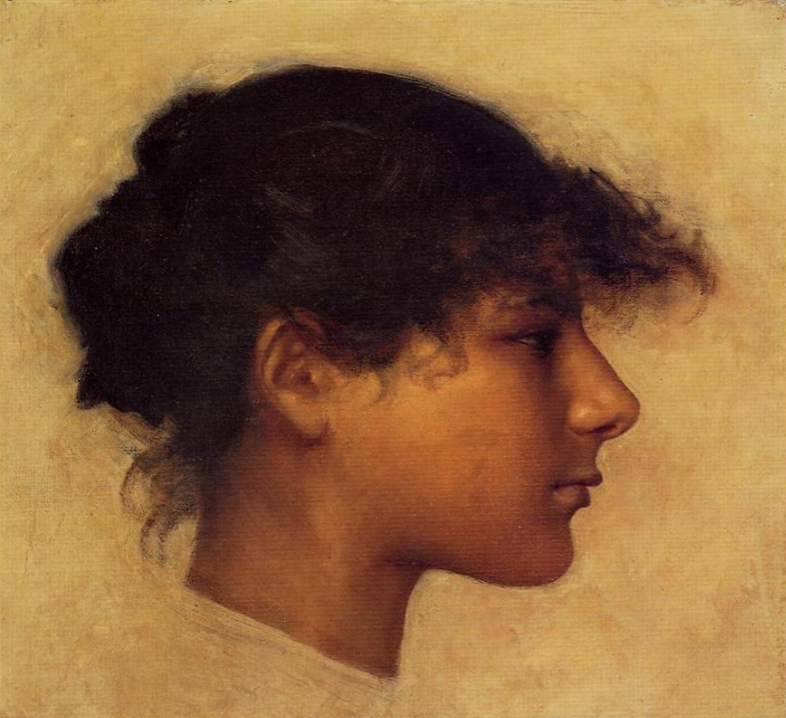
Head Of Ana Capri Girl, 1878
Sargent’s Life: A Public Celebrity With a Private Silence
Sargent was born in Florence to American expatriate parents. He trained in Paris, worked across Europe, and eventually settled largely in London. His rise was meteoric, and he became one of the most sought-after portrait painters in the Western world.
He produced around 900 oil paintings and more than 2,000 watercolors, a massive output that shows how deeply he lived through observation and image-making.
Source: Britannica biography and general catalogue summaries, also reflected in museum archives.
What matters for queer history is that Sargent never married and left no clear public record of romantic relationships. Many artists of his era lived the same way, partly because the social and legal risks of being openly queer were enormous. In Britain, the prosecution of Oscar Wilde in 1895 was a warning to anyone with a public profile.
This creates a familiar problem in LGBTQ+ history: queer lives often appear in fragments, not declarations.
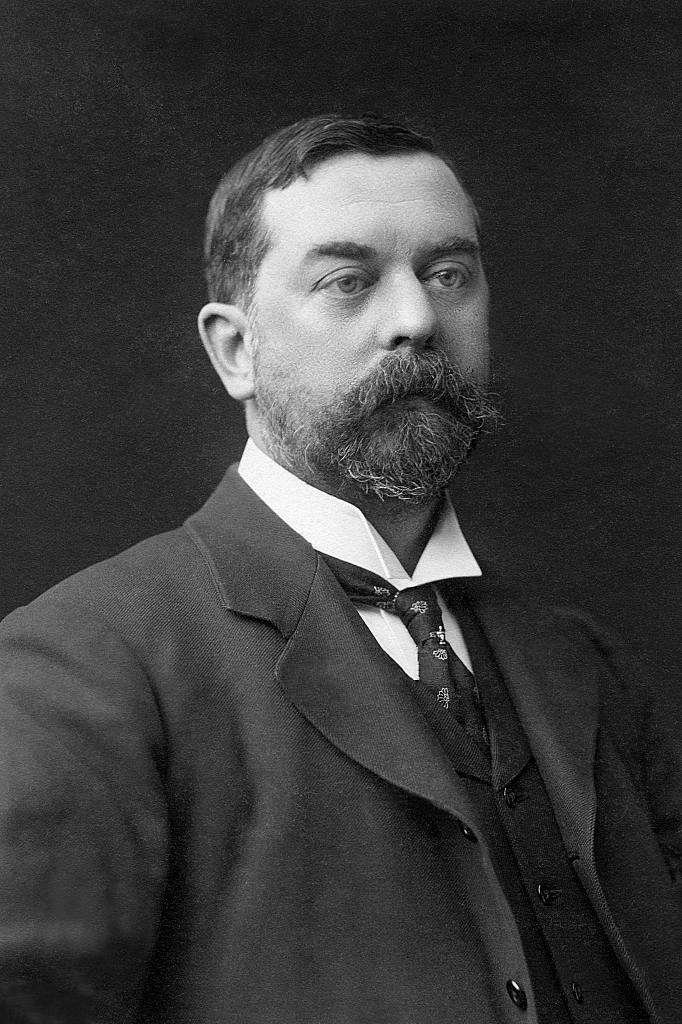
John Singer Sargent, 1903
The “Was He Gay?” Question, and Why It’s the Wrong Starting Point
It is tempting to treat Sargent as a mystery to be solved. Some writers have tried to label him. Others reject the idea entirely. The truth is that historians cannot prove a definitive sexual identity for him using modern categories.
But queer history is not only about proof. It is also about patterns of erasure.
Sargent’s life fits a broader historical reality: many queer artists were publicly celebrated, privately cautious, and later described in biographies with vague language like “confirmed bachelor” or “devoted to his work.” These phrases often served as socially acceptable cover for what could not be said directly.
This is why LGBTQ+ scholarship treats Sargent as significant even without a “smoking gun.” It highlights how queerness was lived in coded ways and how later generations re-read those codes.
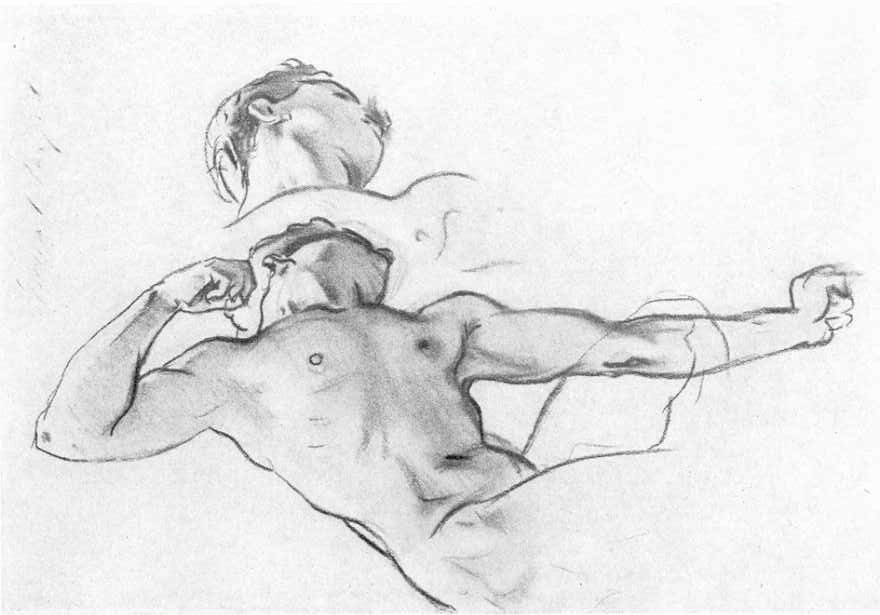
The Archers, possibly 1910
Sargent’s Queer Relevance Begins With His Male Subjects
If you want to understand why Sargent matters to LGBTQ+ cultural history, look at who he painted and how.
His portraits of men often resist stiff Victorian masculinity. Instead, you see elegance, softness, theatricality, and aesthetic self-awareness. In a period when male respectability was tightly policed, Sargent repeatedly painted men as stylish, sensual, and psychologically complex.
This matters because queer-coded masculinity was often expressed through fashion, pose, and “aestheticism,” the cultural movement associated with beauty, refinement, and anti-bourgeois identity. Aestheticism overlaps heavily with queer cultural history, particularly in London and Paris.
In other words, Sargent painted men in ways that later viewers, especially queer viewers, recognize immediately.
His Social World: Aesthetic Circles and Queer Proximity
Sargent moved in the same cultural atmosphere as figures linked to queer history and queer-coded artistic movements. Even if he was not publicly part of queer scandal, his career unfolded inside a world where queerness was present, discussed, feared, and sometimes celebrated quietly.
His portraits of aesthetes and performers matter because they preserve a visual record of a world where same-sex desire and gender nonconformity were often present but rarely documented openly.
That is part of why LGBTQ+ historians and critics return to him. His canvases are not only portraits, they are archives.
The Private Work: Male Nudes and the Limits of What Could Be Shown
One of the strongest reasons Sargent remains relevant to queer art history is the gap between his public commissions and his private studies.
His public reputation was built on portraits designed for elite display. But his private output includes a large number of male figure studies, including nude drawings that were not exhibited publicly in his lifetime.
This divide matters. It suggests a world where the male body could be studied intensely, even erotically, but only in spaces that were not meant for polite society.
Queer history often survives exactly this way: not in official records, but in private material that resurfaces later.
Why This Matters to LGBTQ+ History, Not Only Art History
Sargent is useful to LGBTQ+ history for three reasons.
First, he shows how queer interpretation works responsibly. You do not need to claim certainty. You look at cultural context, social risk, visual language, and patterns of omission.
Second, he shows how masculinity could be portrayed differently, even in an era obsessed with rigid gender roles.
Third, he helps explain how queer aesthetics entered mainstream culture indirectly. Many queer-coded styles became fashionable through art, portraiture, theatre, and high society. Sargent painted that overlap in real time.
This is why his work continues to appear in queer cultural commentary today.
Major Works by Sargent: Where They Are and Why They Matter
Below is a table of major works connected to his wider legacy, including works often discussed in queer cultural readings, gender analysis, or the politics of the gaze.
Key Works Table
| Work | Year | Where It Is Now | Why It’s Important (Including LGBTQ+ Relevance) |
|---|---|---|---|
| Portrait of Madame X (Virginie Amélie Avegno Gautreau) | 1884 | Metropolitan Museum of Art, New York | The scandal around this portrait shows how tightly women’s sexuality and presentation were controlled. It is also about the gaze, performance, and social punishment for perceived transgression. |
| Dr. Pozzi at Home | 1881 | Hammer Museum, Los Angeles | One of Sargent’s most striking male portraits. The theatrical robe, confident stance, and sensual intensity disrupt conventional Victorian masculinity. |
| W. Graham Robertson | 1894 | Tate Britain, London | A major queer-adjacent portrait because Robertson belonged to the aesthetic world strongly associated with queer-coded style. The painting has become a modern queer icon. |
| Carnation, Lily, Lily, Rose | 1885–1886 | Tate Britain, London | A study of softness and atmosphere that shows Sargent stepping away from society portraiture into something more intimate and emotionally open. |
| The Daughters of Edward Darley Boit | 1882 | Museum of Fine Arts, Boston | A psychologically unsettling family portrait. Its strange spacing and emotional distance reflect themes of isolation and unspoken interior life. |
| El Jaleo | 1882 | Isabella Stewart Gardner Museum, Boston | A painting about performance and spectacle, relevant to how identity can be staged. It also reflects Sargent’s fascination with theatre-like presentation. |
| Sargent Archive (letters, sketches, studies) | N/A | Museum of Fine Arts, Boston | The MFA holds the most extensive Sargent archive, crucial for studying his private drawings, networks, and personal artistic interests. |
How to Read Sargent Today Without Oversimplifying Him
If you want to approach Sargent intelligently from an LGBTQ+ point of view, avoid turning him into a simple symbol.
Instead, treat him as an example of how queer history is often constructed:
- from what people refused to say publicly
- from what survives in sketches and private work
- from cultural codes in clothing, posture, and intimacy
- from social circles where queerness existed as an open secret
This approach matters because LGBTQ+ history has been shaped by suppression. Many artists could not leave explicit evidence behind. That does not mean they were irrelevant to queer culture. It means you need better historical tools.
Sargent gives you that case study. His work is a reminder that the queer past often lives in subtext, not confession, and that art can preserve what history tried to erase.


