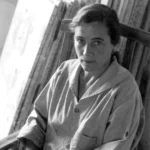
Tove Jansson, 1954
Tove Marika Jansson was born in 1914 in Helsinki, Finland. She trained as a painter and worked as an illustrator and political cartoonist before creating the Moomins, a set of stories that would reach readers across the world. She lived until 2001, continuing to paint, write novels and stories, and shape her own life on her terms.(Wikipedia)
She loved people regardless of gender. She said she “always fell in love with a person,” whether man or woman, which reflects a fluid experience of attraction.(PinkNews) Her long-term partner was graphic artist Tuulikki Pietilä. The two lived together for more than 40 years in Helsinki and spent many summers on a small Finnish island, a life that was public among friends even when queer relationships were still illegal in Finland.(moomin.fandom.com)

Swedish author Astrid Lindgren together with Tove Jansson in Stockholm in 1958
A quiet form of queer courage
Jansson wasn’t an activist in the sense of protests and speeches, but her life choices modeled queer existence at a time when society criminalized it. Homosexuality was illegal in Finland until 1971. She lived with Pietilä openly within her circle and shaped her world around acceptance rather than secrecy.(thisisFINLAND)

Tove Jansson, 1956
Her partner Tuulikki inspired characters like Too-Ticky in Moominland Midwinter. Other characters in Moominvalley reflect her relationships and inner emotional life, including two small characters inspired by her secret affair with a woman early in her life. Their stories of hand-holding and private language mirror Jansson’s real world.(The Horizon Sun)
Queer readers today see these portrayals as representation of unconventional relationships and identities that was radical at a time when public queer life was constrained.(Helsinki Pride)

Tove Jansson at her studio, 1956
Why she matters now
- Her stories calmly teach acceptance and self-acceptance through characters who are different yet embraced in community. Themes of inclusion, friendship, and identity resonate across cultures and generations.(Vogue Scandinavia)
- Her personal life shows you can shape your own life path on your terms even when laws and norms pressure you to hide or conform.(thisisFINLAND)
- Queer readers often identify with her world as a space where differences aren’t barriers. That’s why the Moomins are still discussed in LGBTQ+ contexts and why exhibitions often frame her life through gender and sexuality.(Helsinki Pride)
People feel Moominvalley and Jansson herself offer a model of queer life that is kind, expansive, and life-affirming. Her work continues to be rediscovered across generations precisely because of these humane themes.
Here’s a clear, table-like view of her work with brief notes on relevance:
| Work | Type | Year | Why it matters |
|---|---|---|---|
| The Moomins and the Great Flood | Book | 1945 | First Moomin narrative; themes of loss, survival, community under pressure.(Wallpaper*) |
| Moomin Books (series) | Children’s novels | 1945-1970 | Stories of diversity, acceptance, and belonging. Characters reflect emotional and interpersonal variety.(Barnes & Noble) |
| Moomin Comic Strips | Comics | 1950s-1970s | Brought Moomin themes into newspapers globally; accessible representation of gentle, inclusive stories.(Barnes & Noble) |
| The Sculptor’s Daughter | Memoir | 1968 | Insight into her childhood and creative roots.(Wikipedia) |
| The Summer Book | Novel | 1972 | Mature reflection on life, grief, and human connection. Adapted into a film in 2024.(thisisFINLAND) |
| Short story collections | Fiction | 1960s-1990s | Explored adult themes beyond the Moomin world.(moomin.fandom.com) |
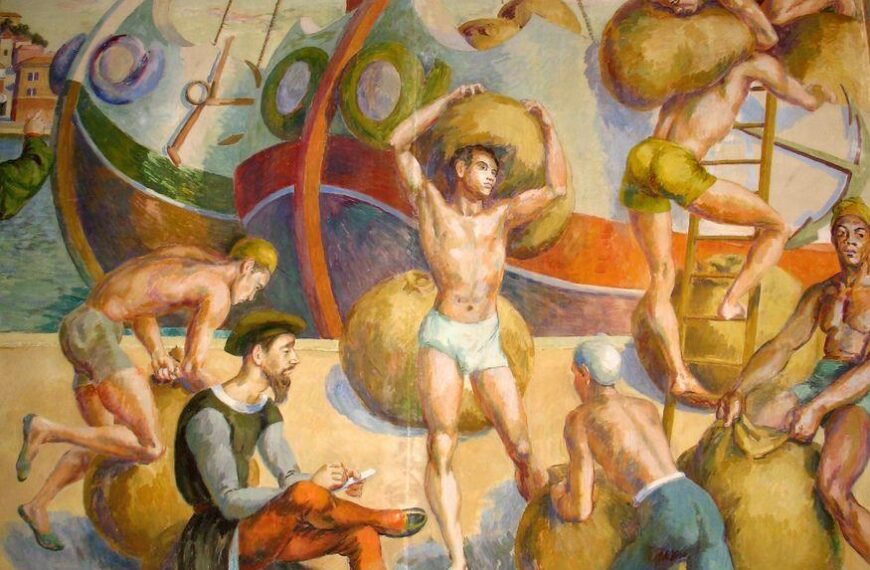
| Painting & illustration | Art | 1930s-2000s | Her lifelong art practice grounded her narrative work; she saw herself first as a painter.(Vogue) |
Tove Jansson still matters because she wrote and lived without shrinking from her identity and values, and because her stories help readers find acceptance, courage, and space for difference. That influence doesn’t fade as readers grow older or as society’s conversations about gender and sexuality evolve.(Vogue Scandinavia)